
Your business may already be doing the hard part well. You deliver a strong service, your team answers calls, customers are happy, and referrals still come in. But when someone in Miami searches for what you sell, they find competitors first, click competitors first, and contact competitors first.
That’s the problem a Web Design Agency Miami search is trying to solve. Not just a prettier site. Not just a redesign. You need a digital system that gets you found, turns traffic into calls, and supports lead generation across Google Search, Maps, Google Ads, and Meta.
If your website looks decent but isn’t producing inquiries, your online presence is underperforming. That costs you every day in a market as crowded as Miami. If you already know that’s your situation, start with a conversation about local SEO in Miami and fix the visibility problem before another month slips by.
Table of Contents
- Is Your Miami Business Invisible Online
- Why Most Miami Web Design Agencies Fail to Deliver ROI
- The Blueprint for a High-Performance Digital Strategy
- Our Process From Strategy to ROI
- What to Expect When Partnering With Us
- Case Studies Real Growth Real Metrics
- Your Questions Answered
Is Your Miami Business Invisible Online
A common Miami scenario looks like this. A law office in Coral Gables has a clean office, experienced attorneys, and strong referrals. A restaurant in Wynwood has solid foot traffic and loyal regulars. A med spa in Brickell spends money on social content. Yet none of them gets enough inbound leads from Google.
Their websites exist, but they don’t pull weight.
The phone isn’t ringing enough from organic search. Contact forms sit quiet. Google Maps visibility is weak. Paid traffic lands on pages that look polished but give visitors no reason to book, call, or request a quote.
Visibility failures usually start before traffic does
Most owners assume the problem is design alone. It usually isn’t. The core issue is that the website was built without a lead-generation strategy behind it. Pages weren’t structured around local intent. Service pages weren’t aligned with search demand. Calls to action were added as decoration instead of conversion tools.
Your site doesn’t need more animation. It needs stronger intent matching, clearer offers, and pages built to capture buyers who are ready now.
In Miami, that gap gets expensive fast because your competitors aren’t waiting. They’re showing up in Maps, collecting reviews, running ads, and taking calls from people who should have found you first.
What online invisibility actually costs
When a site underperforms, the damage spreads across channels:
- Local SEO weakens: Your business misses searches with strong buying intent.
- Google Ads waste increases: Clicks land on pages that don’t convert.
- Meta campaigns struggle: Social traffic arrives cold and leaves cold.
- Sales follow-up gets harder: Weak pages fail to pre-sell your value before the call.
If you’re searching for a web design agency in Miami, you’re probably not shopping for pixels. You’re trying to stop the leak.
That’s the right instinct. The wrong move is hiring a vendor that treats your site like a brochure instead of a sales asset.
Why Most Miami Web Design Agencies Fail to Deliver ROI
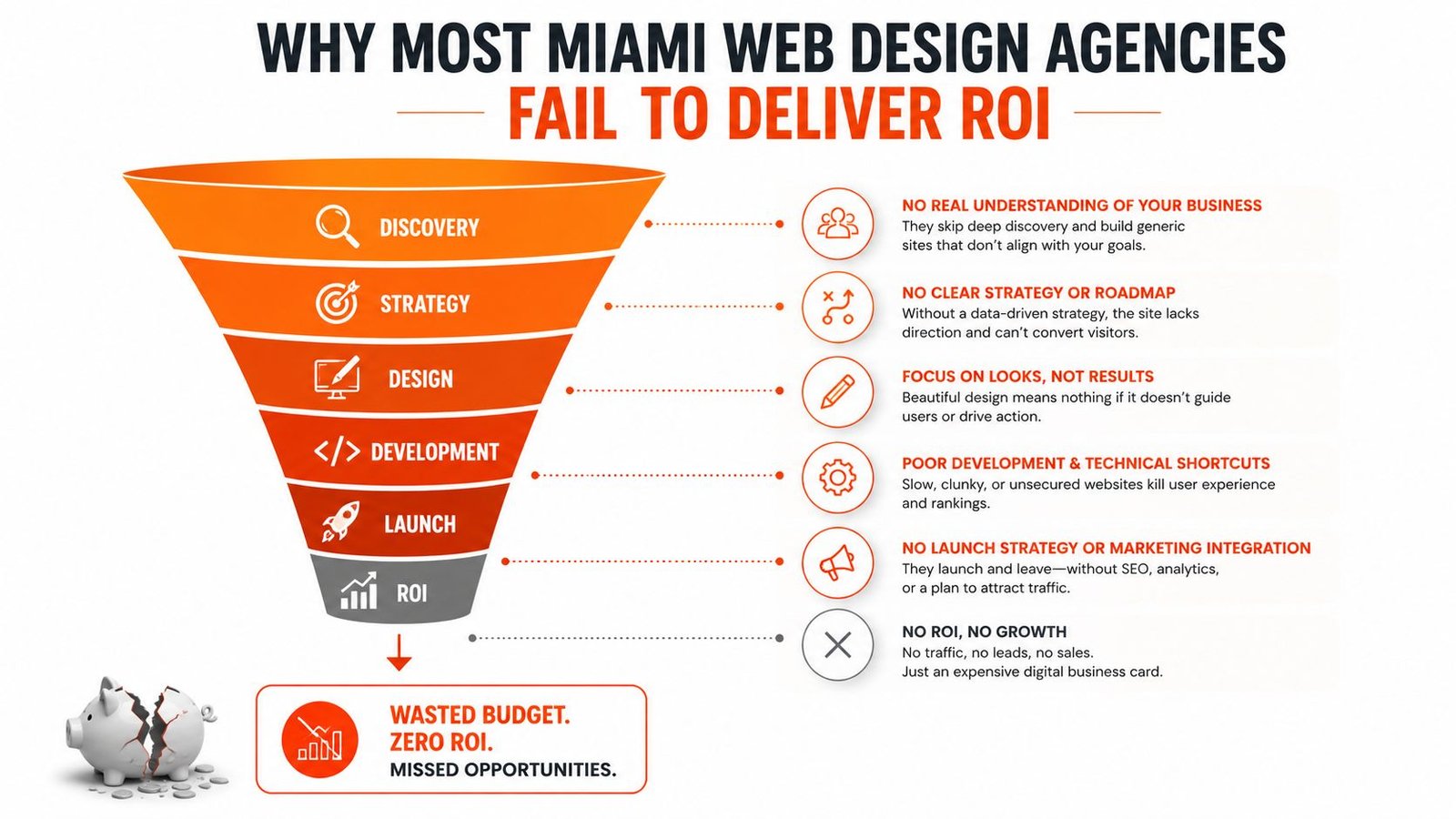
Most agencies don’t fail because they lack design taste. They fail because they confuse bundled services with an actual revenue strategy.
They promise design, SEO, PPC, branding, content, and social under one roof. On paper, that sounds convenient. In practice, it often means disconnected teams, shallow specialization, and no single person owning business outcomes. If you want to avoid that trap, use a sharper evaluation process like this guide on how to choose a digital marketing agency.
The all in one pitch sounds efficient but usually isn’t
The biggest problem is role dilution.
One team designs the site. Another team handles Google Ads. Someone else posts on social. SEO gets added later. Nobody builds the funnel as one system from search intent to landing page to call tracking to booked appointment. That’s why the finished product often looks professional while results stay soft.
The strongest evidence against the generic bundled model is specific to this market. A 2025 Industry Week analysis of 1,200 local campaigns found that for Miami’s competitive hospitality and professional services sectors, splitting design from performance marketing yields 24% higher conversion rates than using bundled agencies that lack specialization, according to DesignRush’s Miami agency analysis.
That should change how you vet agencies.
A pretty site can still lose money
Business owners often get shown homepage mockups instead of funnel logic. That’s a mistake. Buyers don’t convert because gradients look expensive. They convert because the page answers intent fast, removes friction, proves credibility, and makes the next step obvious.
Look at what usually goes wrong:
| Agency promise | What actually happens | Business impact |
|---|---|---|
| Full-service convenience | Specialists work in silos or one generalist handles too much | Accountability disappears |
| Beautiful redesign | SEO structure gets bolted on after design approval | Rankings and visibility suffer |
| Ads management | Campaigns send traffic to weak service pages | Budget gets wasted |
| Social media included | Vanity activity replaces lead-focused execution | Pipeline stays inconsistent |
Practical rule: If an agency can’t explain who owns rankings, who owns landing page conversion, and who owns paid traffic efficiency, don’t hire them.
Miami businesses need coordination, not packaging. If your agency can’t connect search intent, local SEO, paid acquisition, review strategy, and page conversion into one plan, they’re selling activity. Not ROI.
The Blueprint for a High-Performance Digital Strategy
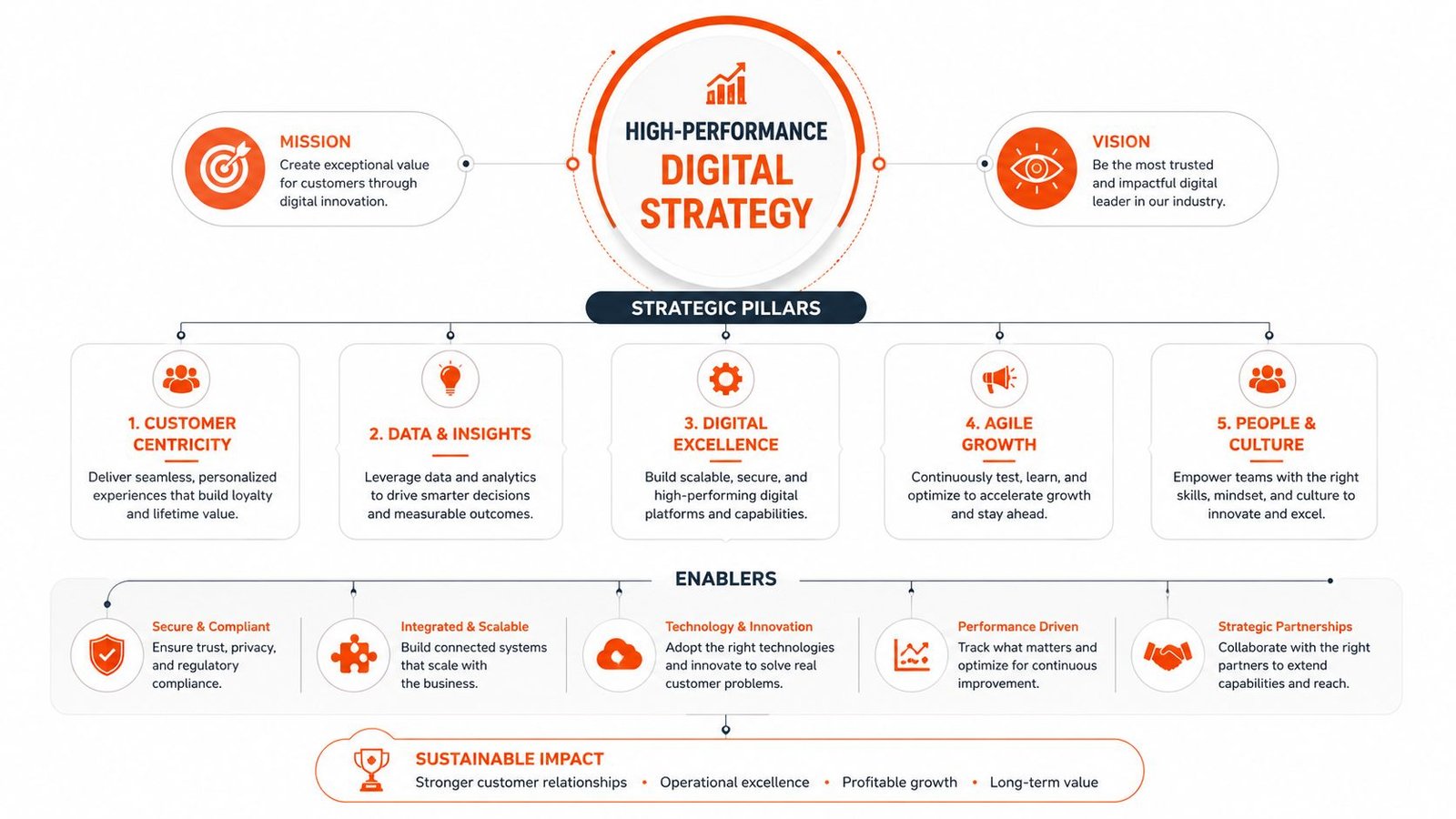
A serious digital strategy doesn’t start with colors, fonts, or a homepage hero section. It starts with buyer intent and channel alignment. Your site should support the channels that drive calls, leads, reservations, quote requests, and booked consultations.
Start with local search intent
For most Miami businesses, the first priority is local discoverability. If you’re in legal, medical, hospitality, home services, or professional services, consumers actively seek services with immediate intent. They want a nearby provider, a trustworthy brand, and an easy way to act.
That means your strategy needs these pillars:
- Google Business Profile optimization: Incomplete profiles lose visibility and trust.
- Review generation: In Miami’s high-competition categories like personal injury law or plastic surgery, businesses need at least 100 reviews with a 4.5-star average to compete for local pack positions, and Miami businesses using targeted local SEO typically achieve a 150% increase in website traffic within the first year, as outlined in this Miami local SEO analysis.
- Location-focused landing pages: Each core service needs its own intent-matched page.
- Mobile-first UX: Many high-intent visits happen on mobile, so speed and clarity matter from the first tap. A practical starting point is reviewing mobile-first website design.
Pair traffic with conversion discipline
Traffic without conversion strategy is expensive. That applies to both SEO and ads.
Your landing pages should answer four questions immediately:
- What do you do?
- Who do you do it for?
- Why should someone trust you?
- What should they do next?
That sounds basic, but most sites still miss it. They bury service details, overload navigation, or send paid clicks to generic pages.
A good framework for improving this is a practical conversion rate optimization guide from Otter A/B. It’s useful because it focuses on the mechanics of turning visits into action, not just getting more clicks.
More traffic helps only when the page is built to convert the traffic you already paid for or worked to earn.
A high-performance digital strategy in Miami should connect local SEO, Google Ads, Meta Ads, reputation management, and landing page testing. Once those pieces work together, the website stops being a static asset and starts functioning like a salesperson that never goes off shift.
Our Process From Strategy to ROI
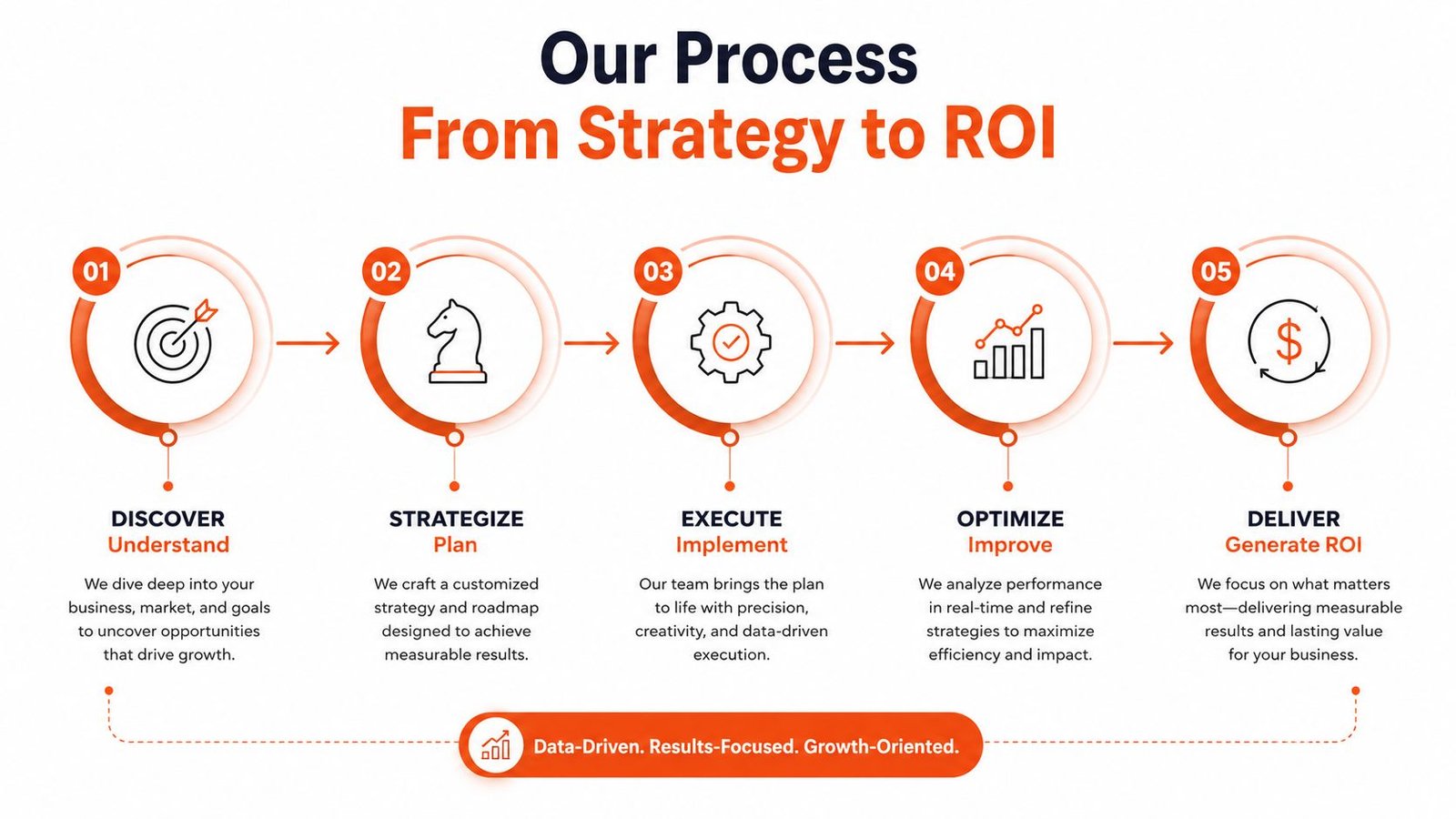
The difference between random marketing activity and a working system is process. If the process is vague, the results will be too.
What happens first
The first step is diagnosis. Not design. Not ad spend.
Before anything gets built, the business needs a clear view of current visibility, page performance, offer positioning, and conversion friction. That includes checking whether the site is aligned with high-intent searches, whether service pages are too broad, and whether lead paths are obvious enough for users who are ready now.
For Miami businesses focused on local demand, the operational workflow matters. A proven local SEO process includes rebuilding the Google Business Profile to full completeness, cleaning NAP inconsistencies across the top 60 citation directories, and deploying a review acquisition system that generates 8 to 15 new reviews within the first 60 days, as detailed by Miami SEO Company’s local SEO workflow.
That’s the kind of work that moves results. Not vague promises about “more visibility.”
A practical example of this integrated approach is lead generation website design, where the website is treated as a conversion tool tied directly to campaign outcomes instead of a standalone deliverable.
Here’s a quick overview of the process in action:
How execution stays accountable
The process should create clear ownership across SEO, paid media, and page performance.
That means:
- Strategy first: Define the primary revenue actions. Calls, booked consultations, quote requests, reservations, or store sales.
- Page architecture next: Build or refine service pages and landing pages around those actions.
- Traffic deployment after that: Launch SEO, Google Ads, and Meta campaigns against pages designed to convert.
- Reporting that matters: Track lead quality, not just sessions and impressions.
If reporting starts and ends with clicks, you’re not measuring business performance. You’re measuring movement.
One relevant factual mention: VIP TECH CONSULTING offers Miami-based web design, local SEO, Google Ads, Meta Ads, and reputation management as connected services, which is the right structure when each channel is managed against lead generation goals instead of isolated deliverables.
If you’re close to making a decision, this is the point to stop comparing websites and start comparing processes. Book a strategy session only with agencies that can show how traffic, page conversion, and local visibility work together.
What to Expect When Partnering With Us
A Miami business usually comes to an agency after wasting months on a polished site, scattered ads, and reports full of activity that never turns into revenue. The pattern is predictable. The all in one agency sold convenience, then handed critical work to generalists who treated web design, SEO, paid media, and conversion as separate tasks.
You should expect the opposite.
A serious agency defines scope before the contract starts. You should know what gets built, who owns each channel, how decisions get made, and which revenue actions the work is meant to increase.
What you get
If your goal is lead generation, the deliverables need to be specific and tied to performance.
- Website work built to convert: WordPress or Shopify development, service page structure, mobile UX improvements, CTA placement, trust builders, and landing pages designed for both paid and organic traffic
- Local SEO execution: Google Business Profile optimization, citation cleanup, location page guidance, review generation strategy, and on page local relevance updates
- Google Ads management: Campaign structure, keyword targeting, landing page alignment, negative keyword controls, and ongoing optimization
- Meta Ads support: Audience targeting, creative testing, retargeting flows, and message to page consistency
- Reputation management: Review acquisition support and monitoring tied to local visibility and conversion trust
That list matters because bundled agencies often promise all of it, then overdeliver on volume and underdeliver on quality. You do not need more disconnected tasks. You need each service managed against the same conversion goal.
For example, a restaurant brand does not need a pretty homepage and separate marketing retainers that never speak to each other. It needs booking paths, local visibility, ad ready landing pages, and mobile performance working as one system, as shown in this restaurant web design project for OKI Miami Lounge.
What clients should clarify before signing
Ask how technical performance is handled during the build, not after launch. Slow pages, weak internal structure, and bloated templates drag down SEO, paid traffic efficiency, and conversion rates at the same time.
Ask how communication works too. Weak agencies hide behind vague timelines and broad retainers. Strong agencies assign ownership and keep the process visible.
You should expect:
- One point of contact: One person responsible for account direction and follow through
- Clear milestones: Strategy approval, page mapping, build or optimization, launch, and reporting
- Fast action on blockers: Form issues, mobile layout problems, weak CTAs, and landing page friction should get fixed quickly
- Reporting tied to business outcomes: Calls, form fills, qualified leads, booked meetings, and closed revenue where tracking allows
Ask this on the first call: “What will you build, what will you optimize, and how will you connect that work to leads and sales?”
That question exposes the all in one agency trap fast. If the answer sounds broad, channel specific, or report driven instead of revenue driven, keep looking.
Case Studies Real Growth Real Metrics
A Miami business does not get paid for having a better-looking website. It gets paid when the site turns traffic into calls, bookings, and qualified leads.
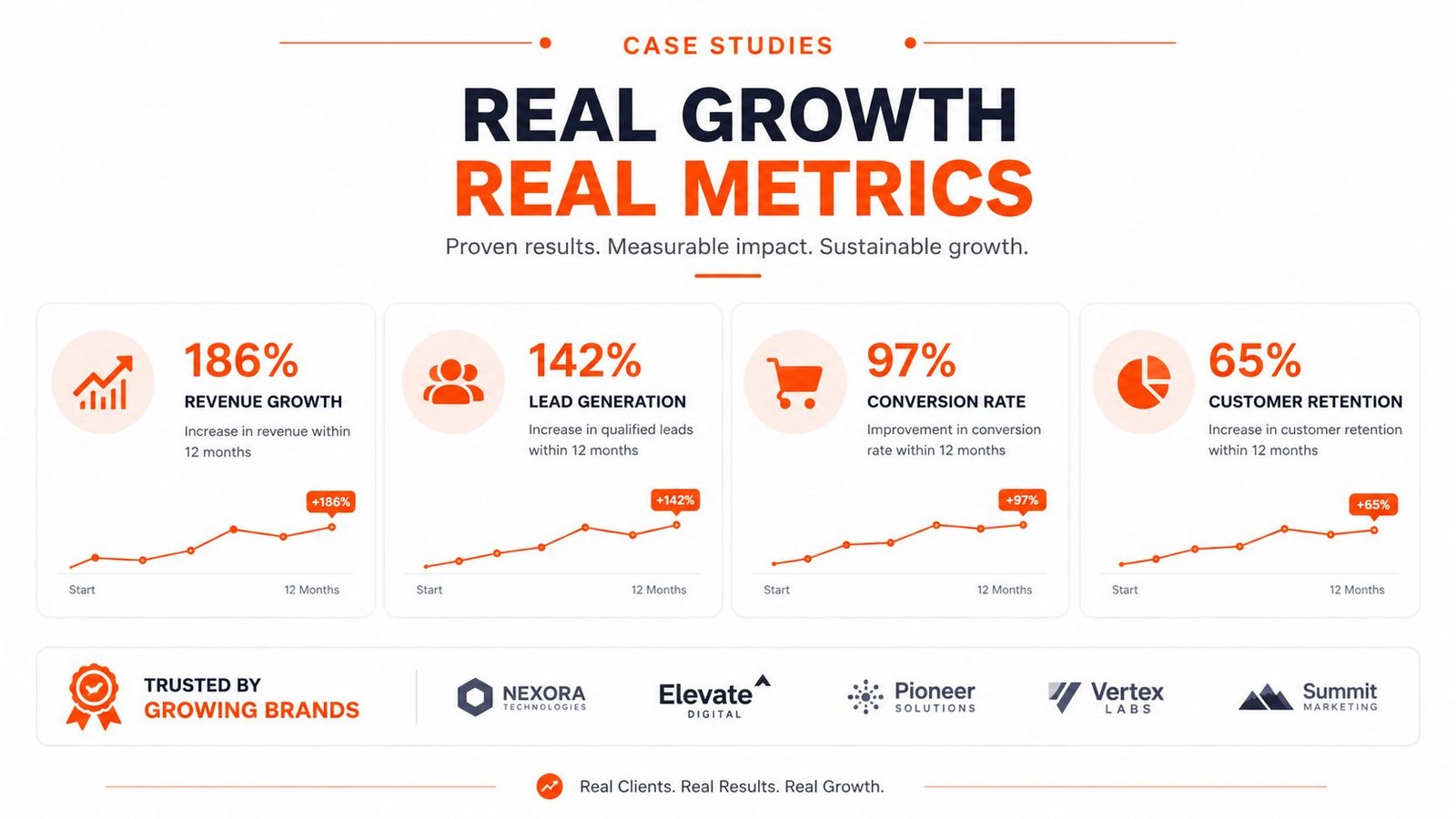
The pattern is consistent across industries. Businesses lose revenue when design, SEO, paid traffic, and conversion strategy are split across disconnected teams, or dumped into an all-in-one agency that sells everything and masters nothing. The result is predictable. Nice visuals, weak intent capture, poor follow-through, and wasted spend.
Hospitality brands need booking systems, not brochure sites
Restaurants, lounges, and hospitality venues in Miami compete on speed, convenience, and trust. If a visitor cannot find the menu, location, hours, or reservation path in seconds, that visit loses value fast. Strong photography helps. It does not fix friction.
A good example is this restaurant web design project for OKI Miami Lounge. The value is not the visual polish alone. The site supports user action, local discovery, and the business goal at the same time. That is the difference between a site that gets compliments and a site that drives reservations.
Professional services need proof, clarity, and strong conversion paths
Law firms, consultants, education providers, and specialized service businesses face a different problem. Prospects hesitate before they contact you. They compare options, question credibility, and leave if the message is vague or the next step feels unclear.
That is where weak all-in-one agencies fall apart. They package branding, content, ads, and web design together, then treat every service line as a separate deliverable instead of one revenue system. You end up with a polished homepage, generic service pages, and no clear path from search intent to inquiry.
High-performing sites for professional services do three things well. They establish trust fast, match the language buyers use when they search, and push visitors toward a direct action without friction. That usually means tighter page structure, better proof points, clearer calls to action, and forms built for lead quality instead of volume.
The winners in Miami build websites that support revenue. Every page should help visibility, trust, and conversion at the same time.
Ask any agency for proof of that connection. If they can only show mockups, page counts, or traffic charts, you are looking at a cosmetic project. Real growth work shows how the site improved business outcomes after launch.
Your Questions Answered
Is this worth the investment
It is, if you expect the website to produce leads, sales calls, and booked consultations.
A serious Miami website project is not a design purchase. It is a business system. The price usually reflects strategy, copy, UX, development, SEO structure, tracking, and conversion setup. Toimi’s review of Miami web design agencies places custom website pricing for small to mid-sized businesses in the five-figure range, with more advanced builds climbing much higher.
Choosing an all-in-one agency because the package looks convenient is a mistake. That shortcut usually gets you average design, recycled copy, weak local SEO, and no clear accountability for revenue. Bundled services save the agency time. They rarely save the client money.
How long does it take
A good custom build takes time because the site has to be planned before it is designed.
In Miami, a standard custom website often takes several months from strategy through launch. As noted earlier, agency timelines commonly land in the 14 to 20 week range, and that can stretch if your business needs custom integrations, location pages, CRM connections, or approval from multiple stakeholders.
That timeline is healthy. Fast projects usually skip research, messaging, technical SEO, and conversion planning. Those are the exact pieces that determine whether the site performs after launch.
Launch is also not the finish line. Rankings, testing, content expansion, and paid traffic improvement happen after the site goes live.
Can you do it yourself
Yes. It is usually a costly decision.
DIY builders work for a placeholder site or a very early business that just needs a web address. They break down when your revenue depends on search visibility, persuasive service pages, paid traffic economics, and forms that attract qualified leads instead of junk submissions.
Use this filter before you sign anything:
| Option | Good fit | Main downside |
|---|---|---|
| DIY builder | Early-stage placeholder site | Weak differentiation, weak SEO, weak conversion setup |
| Cheap freelancer | Small project with tight direction from you | Limited strategic thinking and limited cross-channel planning |
| Generic all-in-one agency | Owner wants convenience and one invoice | Diluted quality across every service, blurred accountability, wasted spend |
| ROI-focused partner | Business needs measurable lead growth | Higher standards, stronger process, real budget required |
Miami is too competitive for a half-built digital presence.
If an agency cannot show how the website connects to search visibility, paid traffic, conversion tracking, and lead quality, do not hire them. A polished homepage is easy to sell. Revenue is harder. That is why so many bundled agencies disappoint.
If you want a partner that treats the website as part of a full acquisition system, contact VIP TECH CONSULTING. The goal is not to launch something new. The goal is to build something that produces returns.