
Your Miami website can look polished and still lose leads every day. If it doesn't generate calls, form submissions, booked consultations, and sales, it isn't doing its job. For Miami businesses, that problem gets worse fast because buyers search on mobile, compare multiple companies quickly, and judge credibility almost instantly through design.
That means every design choice is a sales choice. Slow pages, weak calls to action, poor local signals, and English-only messaging don't just create a bad experience. They send prospects to a competitor who made it easier to take the next step. In a market where over 60% of web traffic comes from mobile devices, mobile optimization isn't optional for local businesses according to Digital Silk's Miami website design study.
If you're already comparing agencies or looking for a better way to turn traffic into revenue, you're in the right place. These Web Design Tips for Miami Businesses focus on one outcome: more qualified leads from your website. If you want a direct review of what's holding your site back, contact VIP TECH CONSULTING for a strategy session and get a clear plan before you lose more local demand.
Table of Contents
- 1. Mobile-First Design for Miami's On-the-Go Lifestyle
- 3. Local SEO Optimization and Google Business Profile Integration
- 4. Fast Loading Speed Optimization for Miami's Internet Infrastructure
- 5. Hurricane-Resilient and Secure Web Infrastructure for Miami Businesses
- 6. Conversion-Focused Design with Clear Call-to-Action CTA Hierarchy
- 7. Reputation Management and Review Integration for Local Credibility
- 8. Hyperlocal Content Strategy and Neighborhood-Specific Landing Pages
- 8. Hyperlocal Content Strategy and Neighborhood-Specific Landing Pages
- 8-Point Miami Web Design Comparison
- The Logical Next Step for Your Miami Business
1. Mobile-First Design for Miami's On-the-Go Lifestyle
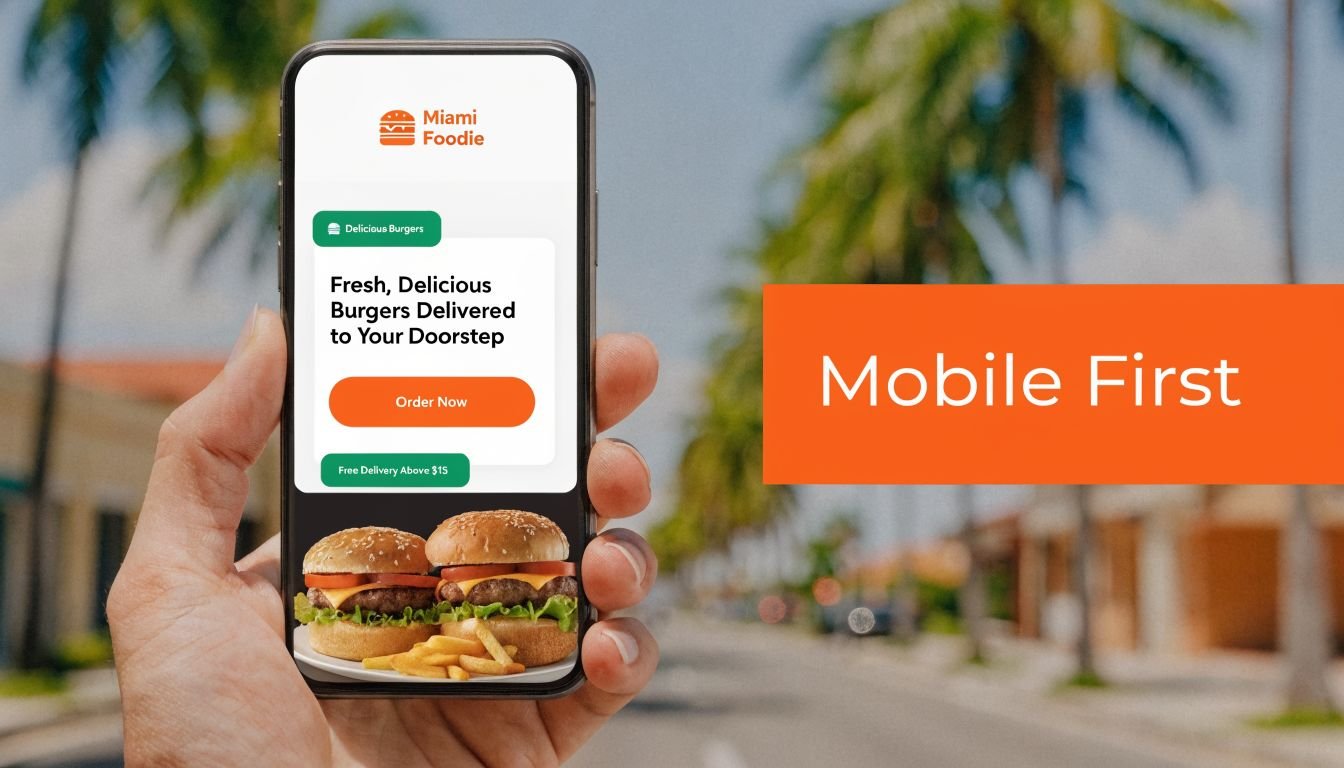
A Miami buyer usually isn't sitting at a desk carefully studying your website. They're on a phone, moving between meetings, standing outside a restaurant, comparing attorneys, or looking for a same-day service provider. If your mobile site feels cramped, slow, or difficult to use, that lead is gone before your sales team even has a chance.
Mobile-first design means you build the phone experience first, not last. That's the right move for Miami businesses because mobile-first implementation is tied to higher engagement and conversion rates, and Google evaluates real experience signals like Largest Contentful Paint under 2.5 seconds, First Input Delay under 100ms, and Cumulative Layout Shift below 0.1 in the standards referenced by Digital Pixxels on 2025 Miami Beach web design must-haves.
Make mobile the primary experience
A restaurant should make menus, ordering, directions, and reservations easy to access with one thumb. A law firm should let someone tap once to call, request a consultation, or open a short intake form. A dental office should make booking visible before the visitor scrolls.
That's not just cleaner design. It's lead capture.
Practical rule: If a prospect can't understand what you do and take action within a few seconds on a phone, your site is underperforming.
What to fix first
- Prioritize above-the-fold actions: Put "Call Now," "Book Consultation," "Reserve a Table," or "Request a Quote" high on the page.
- Use touch-friendly navigation: Make buttons easy to tap, keep menus short, and avoid crowded headers.
- Reduce mobile friction: Remove unnecessary popups, long forms, and tiny text that forces zooming.
- Load images intelligently: Use native lazy loading for lower-page images so key content appears faster.
- Test on real devices: Check iPhones and Android phones on live cellular connections, not just desktop previews.
For Miami businesses comparing providers, this matters because a mobile-first website also supports your SEO and paid traffic. If you're sending Google Ads or local SEO traffic to pages that don't convert well on phones, you're paying for visitors your site can't close.
If you want a site that supports rankings and leads together, review mobile-first indexing best practices from VIP TECH CONSULTING. It's the kind of foundation that prevents wasted traffic and lost inquiries.
3. Local SEO Optimization and Google Business Profile Integration
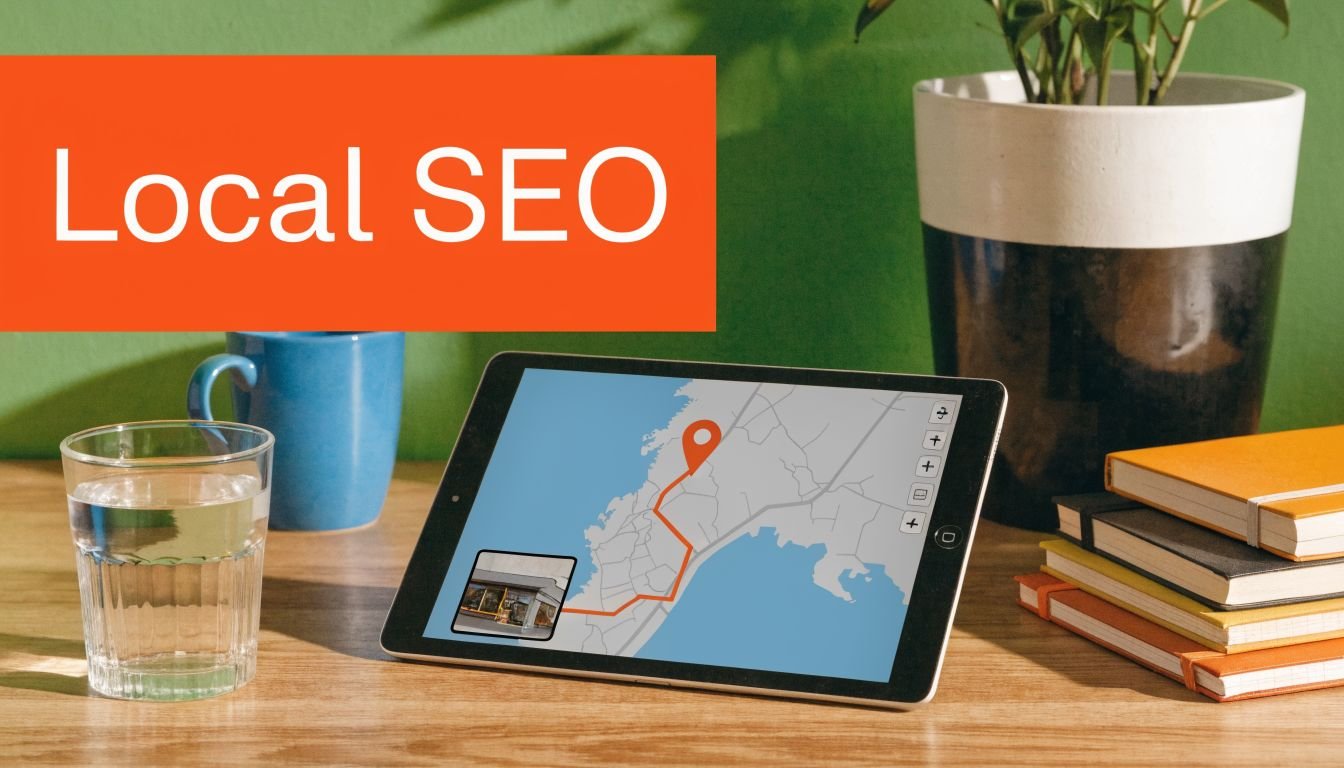
A prospect searches "dentist near me" in Wynwood or "AC repair Brickell" on a hot afternoon. Google shows your Business Profile, your site, your reviews, your hours, and your location signals all at once. If those pieces do not match, you lose the click or the call.
For Miami businesses, local SEO is not a traffic tactic. It is a lead qualification system. It tells Google where you work, tells the buyer that you are relevant nearby, and turns local intent into booked appointments, quote requests, and phone calls.
Your website and Google Business Profile need to function as one sales asset. That means your business name, address, phone number, hours, primary services, service areas, and categories should align across both. It also means the landing page linked from your profile should match the searcher's intent instead of dumping everyone onto a generic homepage.
Build pages that match how Miami buyers search
A single services page is rarely enough in a market as segmented as Miami. People search by service and by location. They look for "immigration lawyer Little Havana," "med spa Coral Gables," or "commercial roofer Doral." Your site should answer that demand directly with service pages and, where justified, neighborhood or city-specific landing pages.
That structure does two jobs. It improves local relevance for search visibility, and it raises conversion rates because the visitor lands on a page that feels specific to their need.
A Brickell law office, for example, should send local search traffic to a practice-area page with the right contact details, clear consultation CTA, office location context, and supporting trust signals. A Miami HVAC company should connect its Google Business Profile to a page built for the exact service being searched, not a broad about page.
What to tighten up
- Keep NAP details consistent: Use the same business name, address, and phone number on your website and Google Business Profile.
- Link GBP to the right page: Send searchers to the most relevant service or location page, not always the homepage.
- Show service areas clearly: List the Miami neighborhoods and surrounding areas you serve.
- Use local schema markup: Help Google understand your business type, location, hours, and service coverage.
- Support trust at the point of conversion: Put reviews, credentials, and location details near forms and call buttons.
- Maintain Google Business Profile updates: Keep hours, categories, photos, and service details current.
If your local presence is inconsistent, you create friction before the lead even reaches your form. If it is aligned, your site does more than rank. It closes.
For a stronger setup that connects rankings with inquiries, review these Miami local SEO strategies for service businesses.
4. Fast Loading Speed Optimization for Miami's Internet Infrastructure
A prospect taps your site from a phone while standing outside your storefront, sitting in traffic, or comparing providers after clicking an ad. If the page stalls, the lead is gone before your headline even loads. In Miami, speed affects sales because buyers are mobile, impatient, and usually looking at more than one option.
Slow pages waste marketing spend. They reduce the value of your SEO work, make paid traffic less profitable, and create drop-off before the visitor reaches your form, menu, booking tool, or call button. That is a lead generation problem with a direct revenue cost.
Mobile performance matters most. Many Miami visitors are browsing on cellular connections, switching between neighborhoods, office towers, homes, and public Wi-Fi. Your site has to load fast under imperfect conditions, not just on a developer's office internet.
Common speed issues are predictable. Oversized images, bloated themes, too many scripts, low-quality hosting, and video or animation loaded too early will slow the pages that are supposed to convert. A restaurant menu, emergency service page, or appointment form should open quickly and stay usable while the rest of the page finishes loading.
Focus on the pages that make money first.
What to improve first
- Compress and properly size images: Large hero banners and gallery photos often cause the biggest delays.
- Cut unnecessary scripts and plugins: Every extra app, tracker, or widget adds weight and processing time.
- Use reliable hosting and caching: Cheap hosting creates slow response times, especially during traffic spikes.
- Prioritize mobile page speed: Test key pages on real phones, not just desktop tools.
- Load critical content first: Headlines, phone numbers, CTAs, and forms should appear before nonessential visual effects.
- Review your current setup with a website speed optimization checklist at https://viptechconsulting.com/how-to-improve-website-loading-speed/.
Fast sites convert better because they remove friction at the exact moment a buyer is deciding whether to trust you. If your website is slow, design improvements will not carry their full value. Speed supports every other sales decision on the page.
5. Hurricane-Resilient and Secure Web Infrastructure for Miami Businesses
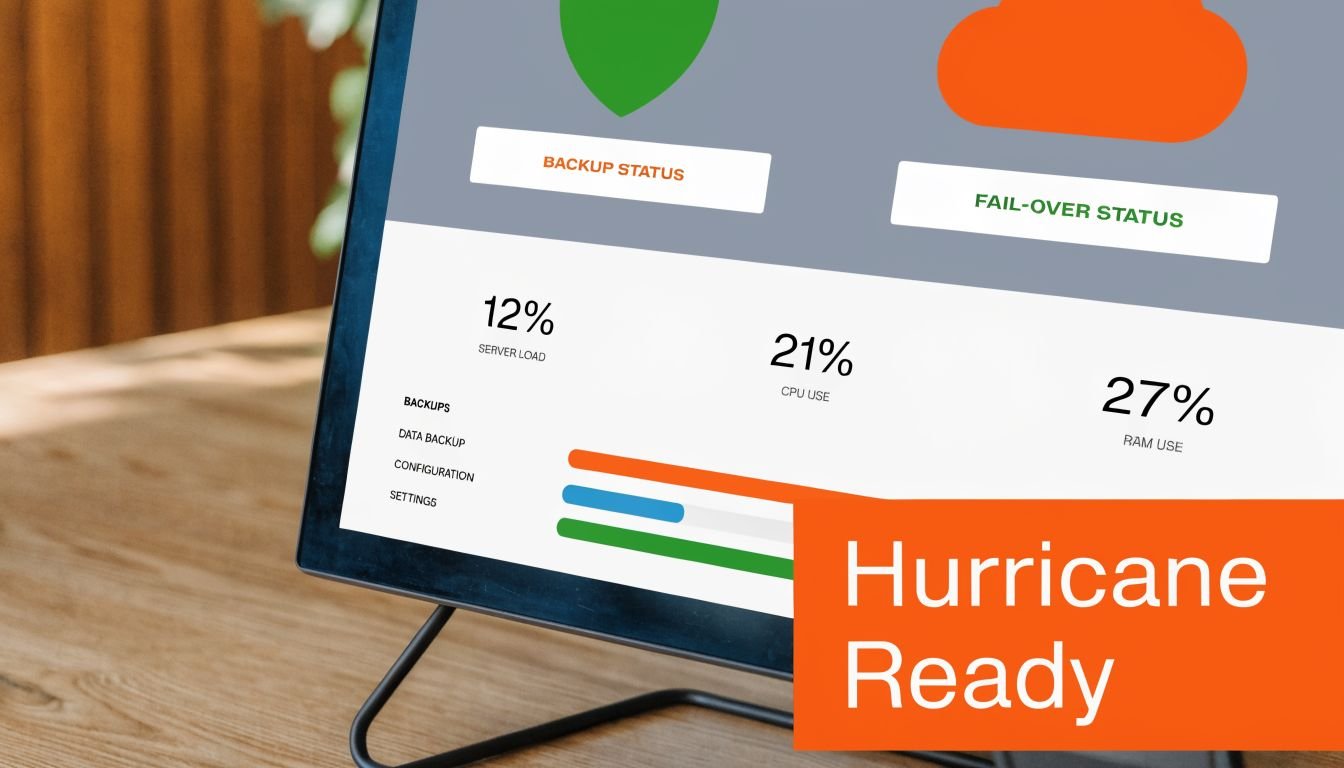
A Miami customer tries to book service while a storm is approaching. Your site times out, the form fails, or the browser shows a security warning. That lead does not wait. It goes to the competitor whose website stays online and looks safe.
That is the core job of web infrastructure. It protects revenue when traffic spikes, weather disruptions, plugin conflicts, and security threats hit at the worst time.
Uptime protects the sales pipeline
For Miami businesses, website reliability is a sales issue. If your phone number, booking page, quote form, product pages, or location details disappear for even a short window, you lose high-intent prospects who were ready to act.
This matters even more for businesses that depend on urgent local demand. A medical practice needs patient information accessible. A contractor needs estimate requests to come through. A retailer needs customers to confirm inventory, hours, and pickup options without friction.
A good-looking website that fails during pressure moments is a weak lead generation system.
Security affects conversion, not just compliance
Visitors notice warning signs fast. An expired certificate, mixed-content alert, broken checkout, or suspicious redirect raises doubt immediately. Once trust drops, conversions drop with it.
Strong security keeps that friction out of the buying process. It also protects the assets that make your site profitable, including forms, customer data, admin access, and payment workflows. If your website is built to generate leads, security has to be part of the design plan from the start. A lead generation website strategy built for conversion and reliability gives infrastructure the same priority as layout and messaging.
What Miami businesses should have in place
The baseline is straightforward:
- Reliable hosting with proven uptime: Cheap hosting fails first when demand increases.
- SSL across the full site: Every page should load securely, not just checkout or contact forms.
- Automatic backups stored off-server: If the site breaks, recovery should take hours, not days.
- Software, theme, and plugin updates: Outdated components are one of the easiest ways attackers get in.
- A recovery process your team can follow: Your staff should know who handles what if the site goes down.
- Security monitoring and malware scanning: Problems should be caught before a customer reports them.
Miami businesses already spend money to get traffic from search, ads, social, and referrals. If the website goes offline or looks unsafe, that investment gets wasted fast. Stable infrastructure keeps your lead flow active, protects trust, and turns your website into a more dependable sales asset.
6. Conversion-Focused Design with Clear Call-to-Action CTA Hierarchy
A Miami prospect lands on your site from Google, scans for five seconds, and asks one question: What do I do next? If the answer is unclear, you lose the lead. That is not a design flaw. It is a sales problem.
This section matters because every page should push a business outcome. More calls. More booked appointments. More quote requests. More walk-ins. If your layout buries the next step under generic buttons, crowded navigation, or long blocks of text, your marketing spend works harder than it should.
Guide visitors to one primary action
Each service page needs one main CTA tied to buyer intent. A personal injury firm should push "Schedule a Consultation." A med spa should push "Book an Appointment." A roofing company should push "Request an Estimate." A restaurant should push "Reserve a Table."
Put that action high on the page. Repeat it after key decision points. Keep it visible on mobile if calls or bookings drive revenue for your business.
Weak CTA hierarchy creates hesitation. Strong CTA hierarchy removes it. A well-built page uses size, color, spacing, placement, and supporting copy to make the next step obvious. If you want your website to produce leads consistently, build it with a lead generation website strategy that prioritizes conversion paths, not a generic template built to fill space.
What a conversion-ready page should include
- One clear primary CTA: Do not give equal visual weight to "Contact," "Learn More," and "Get Started."
- A logical secondary CTA: Offer a lower-commitment option like "View Pricing" or "See Our Work" for visitors who are not ready yet.
- Short forms: Ask only for the details your team needs to respond and qualify the lead.
- Trust signals near the CTA: Place reviews, certifications, response-time expectations, or location cues close to the action button.
- CTA copy that matches intent: "Get a Quote" usually performs better than vague labels like "Submit."
- Mobile tap targets that are easy to use: If the button is hard to find or hard to press, conversions drop.
The goal is direction, not decoration.
A Miami home services company may need a sticky "Call Now" button during business hours and a quote form after hours. A law firm may need consultation CTAs above the fold and again after case results or testimonials. A clinic may need appointment booking tied closely to insurance information, location details, and provider trust markers.
Design choices shape lead quality too. If every page pushes the same generic contact form, you get more noise. If each page lines up the CTA with the visitor's intent, your team gets better inquiries and closes more revenue from the traffic you already have.
If your website gets traffic but too few leads, start here. Fix the CTA hierarchy before you spend another dollar driving more visitors to a page that does not tell them what to do.
7. Reputation Management and Review Integration for Local Credibility
A Miami prospect lands on your site, likes what you offer, and still hesitates. That hesitation usually comes down to trust. If your proof is missing, buried, or stale, you lose the lead before your team ever gets a call.
Reviews belong inside the sales process. A local service business should not force visitors to leave the site, check Google, scan third-party profiles, and then decide whether the company feels credible. Put that proof on the pages where buyers make decisions.
Put reviews where they affect lead generation
Homepage testimonials help, but they are not enough. Service pages, location pages, quote-request pages, and contact pages need credibility cues tied to the offer on that page. A family law prospect wants proof from past legal clients. A Brickell condo owner looking for HVAC work wants confidence that your crew shows up on time and communicates well. Relevance matters more than volume.
Strong review integration should include:
- Recent testimonials: Old reviews make the business look inactive.
- Service-specific proof: Match reviews to the service being promoted.
- Local cues: Mention Miami, nearby neighborhoods, or recognizable service areas when the review supports it.
- Named platforms: If a quote came from Google or another review platform, label it clearly.
- Visual consistency: Reviews should look like part of the site, not like an afterthought pasted into a sidebar.
Trust has to appear close to action.
If someone is about to request an estimate, book an appointment, or schedule a consultation, place ratings, short testimonials, and reassurance copy near that form or button. That design choice reduces doubt at the exact point where doubt kills conversions.
Use reputation content to strengthen sales, not just branding
A good testimonial does more than say you were "great." It answers an objection. It shows speed, professionalism, results, communication, cleanliness, transparency, or follow-through. Those details help prospects justify contacting you now instead of comparing three more companies.
This is especially important in Miami, where buyers often have plenty of local options and little patience. If your competitor shows stronger proof, cleaner review presentation, and more visible customer feedback, they look safer to hire.
For businesses that need a stronger system for collecting, monitoring, and displaying proof, a structured online reputation management strategy for local businesses helps turn customer feedback into a steady source of trust and qualified leads.
What to avoid
- Generic testimonial blocks with no names, no context, and no service connection
- Walls of five-star quotes that feel curated instead of believable
- Outdated reviews that suggest the business has slowed down
- Broken embeds or third-party widgets that hurt page speed or mobile usability
- Separate "reviews" pages with no proof distributed across the rest of the site
A strong Miami website sells credibility before your sales team ever speaks to the lead. If reviews are treated as decoration, they add little. If they are placed with intent, they reduce hesitation, improve conversion rates, and help turn local traffic into booked revenue.
8. Hyperlocal Content Strategy and Neighborhood-Specific Landing Pages
A Miami business owner loses leads every day with a site that says “we serve all of Miami” and leaves it at that. A prospect in Brickell wants to know you work in Brickell. A prospect in Coral Gables wants proof that you understand Coral Gables. If your website blurs every neighborhood into one generic service area page, you give up high-intent searches to competitors with sharper local pages.
This is not a content exercise. It is a sales decision.
Every neighborhood page should target a real buying pattern. People search by service and location because they want a nearby provider, a faster response, and confidence that you know the area. Your website should answer that intent directly, then move the visitor to a call, form submission, booking, or consultation.
Build pages for the neighborhoods that produce revenue
If you are a law firm, med spa, contractor, dentist, plumber, realtor, or any local service business, create individual landing pages for the Miami neighborhoods you want to win. Start with places that already produce jobs, stronger margins, or better customer lifetime value.
Do not publish near-duplicate pages with the neighborhood name swapped out. That approach weakens search visibility and gives visitors no reason to trust the page. A strong neighborhood page needs its own angle, its own proof, and its own conversion path.
Good pages usually include:
- A clear service-and-location headline: State exactly what you offer and where.
- Local context: Reference the neighborhood naturally, including common property types, business districts, traffic realities, or customer needs that affect the service.
- Relevant proof: Use testimonials, examples, or project references tied to that area when possible.
- Specific calls to action: Match the next step to buyer intent, such as request a quote, book an appointment, or schedule a consultation.
- Service details that matter locally: Explain response times, coverage area, parking, building access, condo requirements, or other practical details that remove friction.
Write for local intent, not for search engines alone
A page for Wynwood should not read like a page for Aventura. The customer mindset is different. The property mix is different. The pace is different. The objections are different too.
That difference affects conversion rates.
If you run one generic page, every visitor has to do extra work to decide whether you are the right fit. If you build a page that reflects the neighborhood, you shorten that decision. You make the lead feel expected, not incidental.
A strong hyperlocal page often answers questions like these:
- Do you already serve this neighborhood?
- What services are most requested here?
- Are there building, access, permit, or scheduling issues unique to this area?
- How quickly can someone hear back?
- What is the best next step for this type of customer?
Prioritize the neighborhoods that match your growth plan
Do not try to build pages for every Miami-area location at once. Start with the places where your business can get the best return. For some companies, that means high-density neighborhoods like Brickell or Downtown. For others, it means family-heavy residential areas, luxury markets, or nearby suburbs that convert well and produce repeat business.
That is the right way to treat web design as a growth engine. You are not filling your site with extra pages. You are building digital entry points for profitable local demand.
A Miami website should do more than announce your service area. It should turn neighborhood-level intent into qualified leads, and qualified leads into revenue.
8. Hyperlocal Content Strategy and Neighborhood-Specific Landing Pages
A lot of Miami businesses say they serve the whole area, then put every neighborhood into one long paragraph on a generic page. That rarely works well for high-intent local search.
Someone in Wynwood doesn't always search the same way as someone in Coral Gables, Brickell, or Aventura. Hyperlocal landing pages help you match that intent with the right service and the right place.
Stop using one generic service area page
If you're a plumber, dentist, law firm, med spa, or home service company, build individual pages for the neighborhoods you want to win. Each page should speak to the service in that area, the local context, and the next step the prospect should take.
This approach also supports better UX. Clear navigation can reduce bounce rates by up to 40%, and 92% of users want intuitive menus, based on the web design statistics summarized by Marketing LTB. Organized neighborhood pages make your site easier to use while strengthening local relevance.
Pages that attract high-intent local searches
A useful neighborhood page isn't a copied template with a place name swapped in. It should include:
- Specific service relevance: Explain the actual service and why nearby customers choose it.
- Local references: Mention neighborhoods, landmarks, or service conditions where appropriate.
- Unique calls to action: Let the visitor request help in that area immediately.
- Internal linking: Connect neighborhood pages to your main services and contact page.
- Local proof: Add testimonials, review snippets, or examples that support trust in that area.
A real estate agency can build pages for Brickell condos, Coral Gables homes, and Wynwood investment opportunities. An HVAC company can create separate pages for AC repair in South Beach and maintenance in Aventura. A restaurant group can support neighborhood-specific reservation or delivery intent.
This strategy works best when content, design, Local SEO, and conversion planning are handled together. That's why DIY page sprawl usually underperforms. The businesses that gain traction build these pages with search intent and lead flow in mind.
8-Point Miami Web Design Comparison
| Item | Implementation complexity | Resource requirements | Expected outcomes | Ideal use cases | Key advantages |
|---|---|---|---|---|---|
| Mobile-First Design for Miami's On-the-Go Lifestyle | Medium, responsive redesign and extensive device testing | Front-end developers, UX designer, mobile testing devices, performance tools | Improved mobile SEO, higher mobile conversions, lower bounce | Restaurants, service providers, retail and e-commerce targeting mobile users | Better Google rankings, higher engagement and conversions from mobile traffic |
| Bilingual Web Design (English/Spanish) for Miami's Diverse Market | High, dual content, hreflang, QA across languages | Native translators, CMS multilingual setup, dev for toggles, ongoing localization | Expanded reach, higher conversions from Spanish speakers, improved Spanish SEO | Hospitality, legal, healthcare, real estate, customer-facing businesses | Access to large Hispanic market, increased trust and competitive differentiation |
| Local SEO Optimization and Google Business Profile Integration | Medium, ongoing optimization and schema work | SEO specialist, GBP management, local citation building, content for location pages | Higher visibility in local pack, increased foot traffic and local leads | Multi-location businesses, service providers, storefronts | Dominates 'near me' searches, high ROI and map visibility |
| Fast Loading Speed Optimization for Miami's Internet Infrastructure | Medium–High, technical performance tuning and monitoring | Devops/frontend dev, CDN, caching, performance audit tools, better hosting | Improved Core Web Vitals, higher conversions, lower bounce and ad costs | E-commerce, image-heavy sites, mobile-first businesses | Faster UX, better rankings, improved ad quality and conversion rates |
| Hurricane-Resilient and Secure Web Infrastructure for Miami Businesses | High, redundancy, security, DR planning | Enterprise hosting, backups, WAF/DDoS protection, security audits, trained staff | Increased uptime, rapid recovery after incidents, data protection and compliance | Healthcare, finance, large e-commerce, mission-critical services | Business continuity during disasters, customer trust, regulatory compliance |
| Conversion-Focused Design with Clear CTA Hierarchy | Low–Medium, design, copy, and A/B testing | UX/UI designer, copywriter, CRO tools, analytics, testing framework | Significant lift in conversion rates, improved ROI on traffic and ads | Lead generation sites, booking services, e-commerce product pages | Higher conversions without extra traffic, clearer user journeys and better ad ROI |
| Reputation Management and Review Integration for Local Credibility | Medium, integration plus ongoing review management | Review platforms/tools, staff for solicitation and responses, widget integration | Stronger trust signals, improved local rankings, higher conversion from social proof | Service businesses, restaurants, professional services | Social proof drives conversions, improves local SEO and customer confidence |
| Hyperlocal Content Strategy and Neighborhood-Specific Landing Pages | High, many targeted pages and careful SEO structure | Content writers, local SEO specialist, photographers, CMS organization | Improved neighborhood-level rankings and high-intent leads | Multi-neighborhood service providers, real estate, local contractors | Captures hyperlocal "near me" intent, reduces competition and increases relevance |
The Logical Next Step for Your Miami Business
At this point, the pattern should be clear. Your website isn't just a digital brochure. It's the place where your SEO, Google Ads, local visibility, reviews, trust, and conversion strategy either work together or fall apart. When those pieces aren't aligned, the result isn't abstract. You lose calls, form submissions, reservations, and sales.
That's why Web Design Tips for Miami Businesses should always be treated as growth strategy, not just design advice. Mobile layout affects search visibility and lead completion. Bilingual structure affects trust and market reach. Local SEO integration affects whether you show up when someone searches for help nearby. Speed affects whether paid traffic becomes revenue or disappears. CTA structure affects whether a visitor acts now or leaves to compare another company.
Most business owners already know something feels off when their site isn't producing enough inquiries. They see traffic without enough leads. They get inconsistent call volume. They invest in advertising and feel like the website is the weak link. They're usually right.
You can try to patch these issues one at a time. Update the homepage. Tweak a button. Install another plugin. Add a new form. That usually creates more complexity without solving the underlying problem. A high-performing website needs strategy, technical execution, clean UX, local search alignment, and conversion planning from the start.
Professional help becomes the logical investment. You're not hiring an agency just to make pages look better. You're hiring a team to build a system that turns visibility into revenue. That means understanding how a Miami customer searches, what makes them trust a business quickly, and what reduces friction between interest and action.
VIP TECH CONSULTING is positioned for exactly that kind of work. The agency combines website design, Local SEO, Google Ads, Meta Ads, reputation management, and ongoing support so your lead generation strategy doesn't live in separate disconnected tools. That's a major advantage for businesses that don't want to coordinate developers, SEO freelancers, ad managers, and hosting vendors on their own.
When you're evaluating providers, ask practical questions. Will they build for mobile first? Can they structure pages for local search? Do they understand bilingual conversion paths? Will they improve speed and support tracking? Can they help your website work better with your Google Business Profile and ad campaigns? If the answer is vague, keep looking.
A serious partner should also reduce uncertainty. You should know what they're going to build, how they communicate, what gets optimized, and how the website supports your sales process. That's what turns a redesign from a risky expense into a measurable business move.
If your current site isn't generating enough qualified leads, waiting won't fix it. Miami is competitive, and the companies that respond fastest, look most credible, and make conversion easiest keep winning the demand that's already in the market.
The next step is simple. Book a strategy session, get direct feedback on where your website is underperforming, and see what it would take to turn it into a stronger lead source. If you're ready to compete harder in local search, improve conversion rates, and stop sending prospects to faster competitors, now is the right time to act.
If you're ready to turn your website into a reliable source of leads, bookings, and sales, contact VIP TECH CONSULTING to schedule your strategy session. You'll get a practical review of your current site, clear direction on what needs to improve, and a results-focused path for stronger SEO, Local SEO, Google Ads performance, and conversion-driven web design.