
Fill out below form and send we will get back to you as soon as possible
Swipe for all services →
A professional aesthetics academy needed to sell paid tickets to an in-person masterclass in Puerto Rico, in a small market and with only five weeks to do it. This is how a low-cost warm-up phase and a sales campaign segmented by level of interest filled the event.
The client is an advanced aesthetics training academy (name withheld for confidentiality). It hosted an in-person masterclass in Puerto Rico on November 12, 2026, and needed to sell paid tickets to industry professionals.
Two things made it hard: the market was limited in size, and the sales window was only five weeks. Boosting a few posts would not have been enough. Every ticket had to come from a campaign built to find buyers, not just people who like the content.
One event, one date, one goal: tickets sold and tracked on the website.
We separated interest generation from selling, so the conversion algorithm did not have to find the audience from scratch. Five decisions shaped the results.
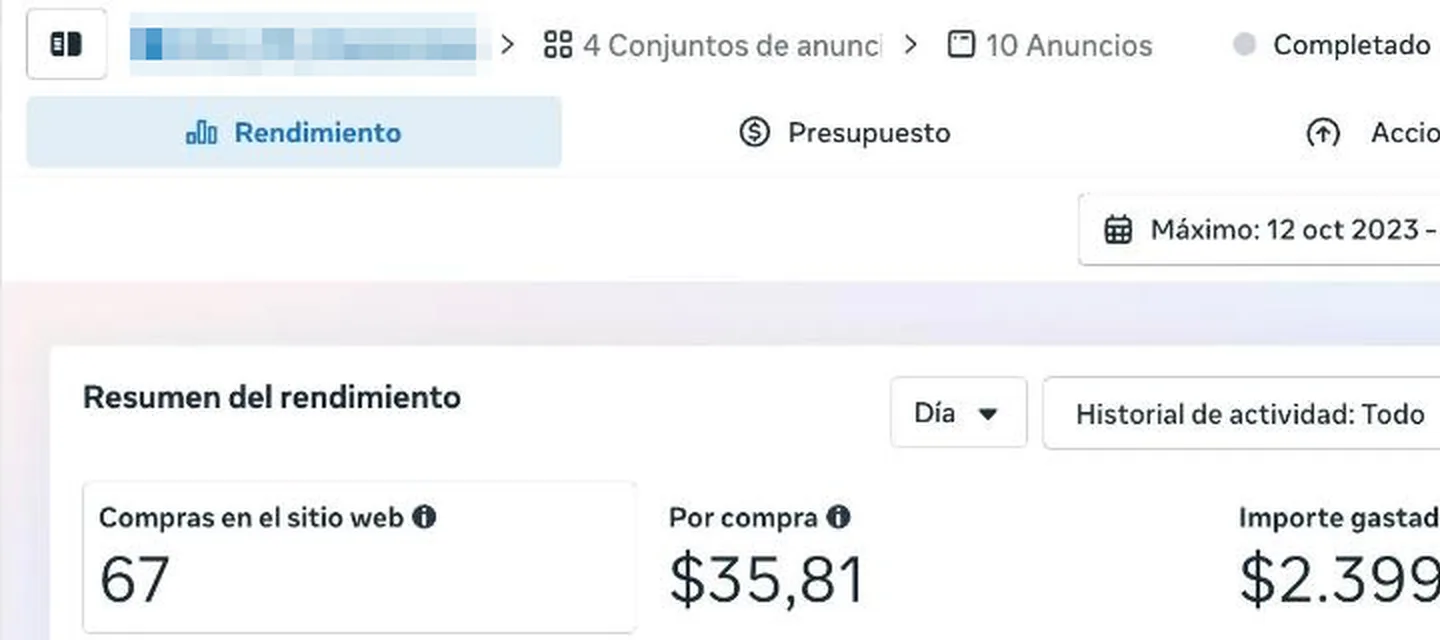
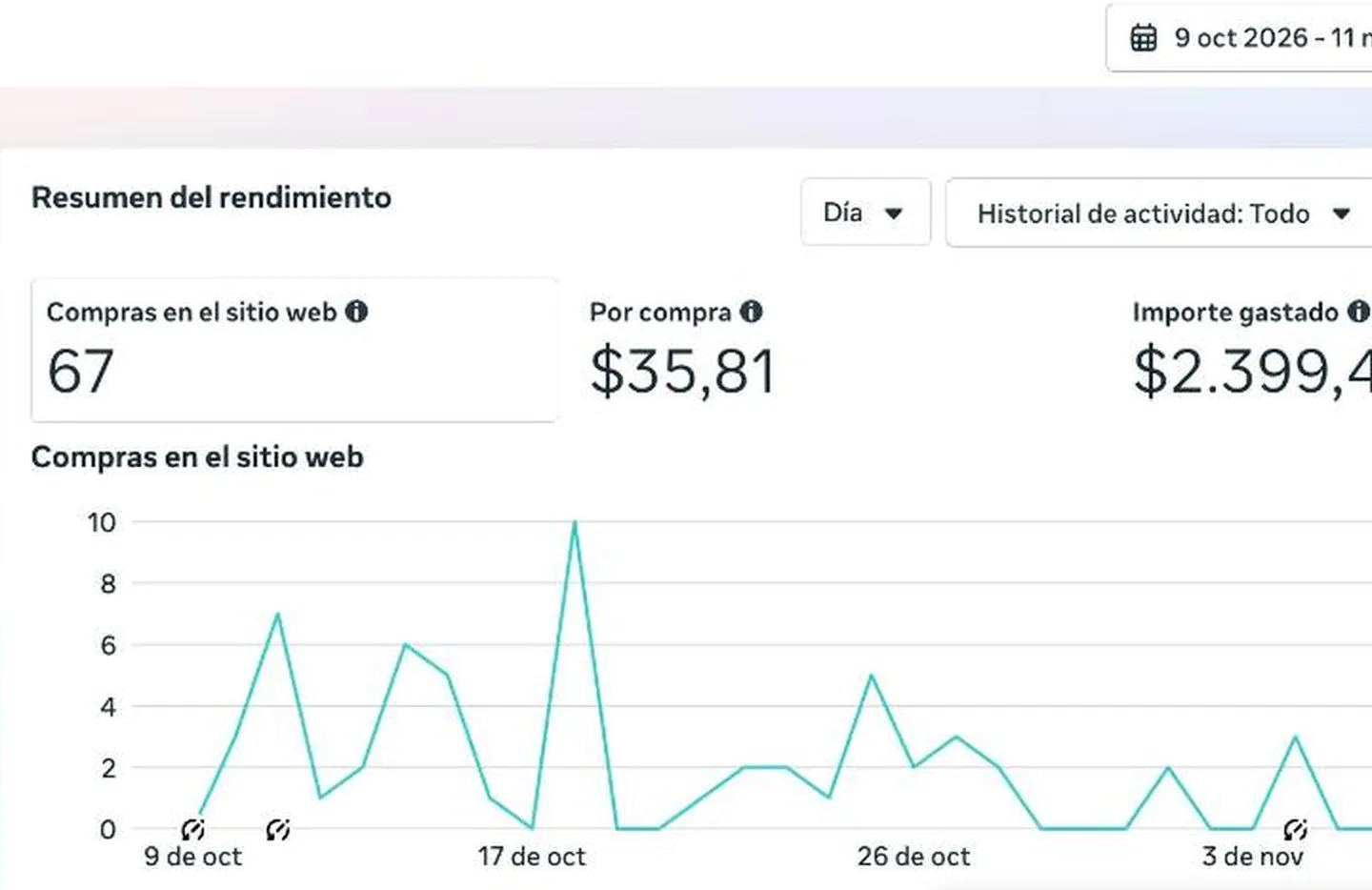
From October 9 to November 11, 2026, the sales campaign generated 67 ticket purchases with $2,399.43 in ad spend: $35.81 per purchase and $5,508 in purchase value (2.30x ROAS). Adding the $269.74 warm-up phase, total investment was $2,669.17, with a blended cost of $39.84 per purchase and a blended ROAS of 2.06x.
People who watched the most video in the warm-up phase bought 42% cheaper than the cold audience ($43.33).
3,470 link clicks at $0.38 each. 86% of clicks loaded the ticket page.
299 people started checkout and 67 completed the purchase, with an average ticket of $82.21.
| Step | Volume |
|---|---|
| Impressions | 223,732 |
| Link clicks | 3,470 |
| Landing page views | 2,986 |
| Checkouts initiated | 299 |
| Purchases | 67 |
Sales campaign only (Phase 2). Source: Meta Ads Manager.
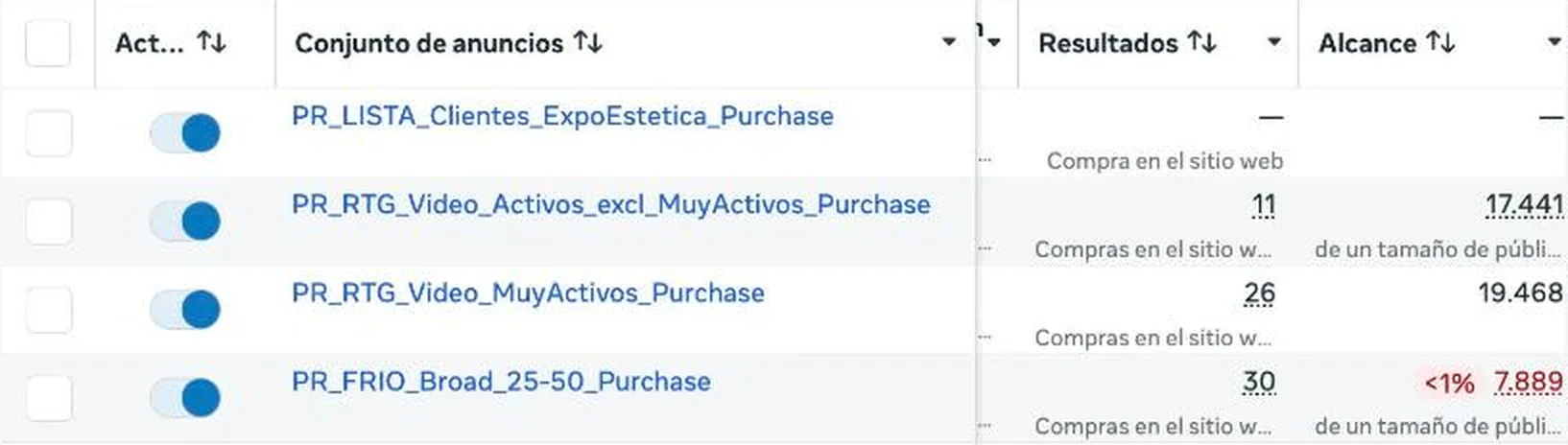
| Ad set | Spend | Purchases | Cost each | ROAS |
|---|---|---|---|---|
| Retargeting · highly engaged video viewers | $649.77 | 26 | $24.99 | 2.73x |
| Cold audience · broad | $1,299.81 | 30 | $43.33 | 2.38x |
| Retargeting · engaged (excludes highly engaged) | $449.85 | 11 | $40.90 | 1.42x |
The two retargeting ad sets delivered 37 of the 67 purchases (55%). The cold audience cost more per purchase but brought the highest average ticket ($103 vs. $68), which kept its ROAS at 2.38x.
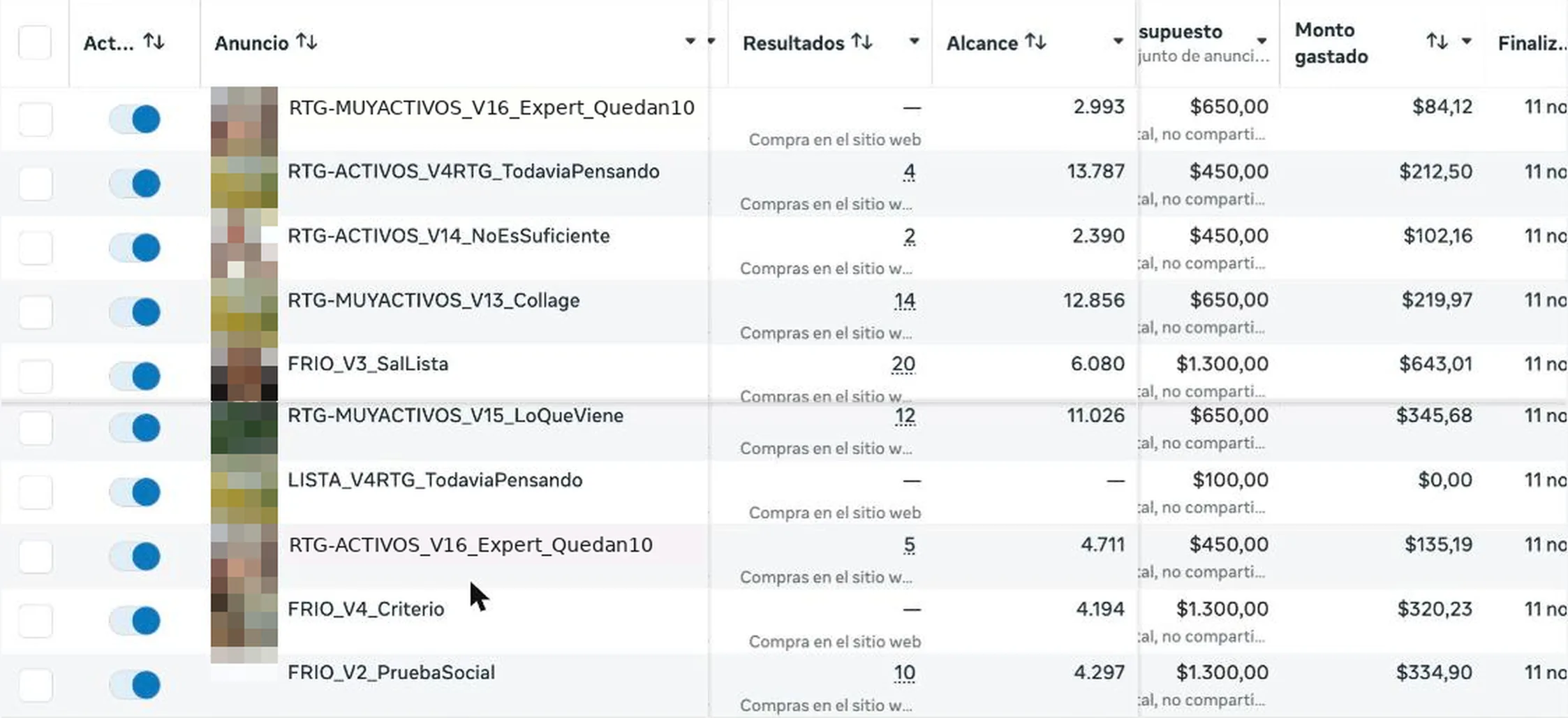
The campaign ran 10 video and image ads, each with a distinct angle for the ad set it served. The most efficient creative was not the most polished one: it was a collage of the real event shown to people who already knew the brand.
| Ad angle | Purchases | Cost each | ROAS |
|---|---|---|---|
| Retargeting · Event collage | 14 | $15.71 | 5.37x |
| Cold · Social proof | 10 | $33.49 | 3.39x |
| Retargeting · Expert + "10 spots left" | 5 | $27.04 | 3.08x |
| Cold · Sales (volume leader) | 20 | $32.15 | 3.05x |
| Retargeting · "What's coming" | 12 | $28.81 | 1.72x |
Top 5 ads by ROAS. Ad-level data also showed which angles did not convert, which is valuable for the next event.
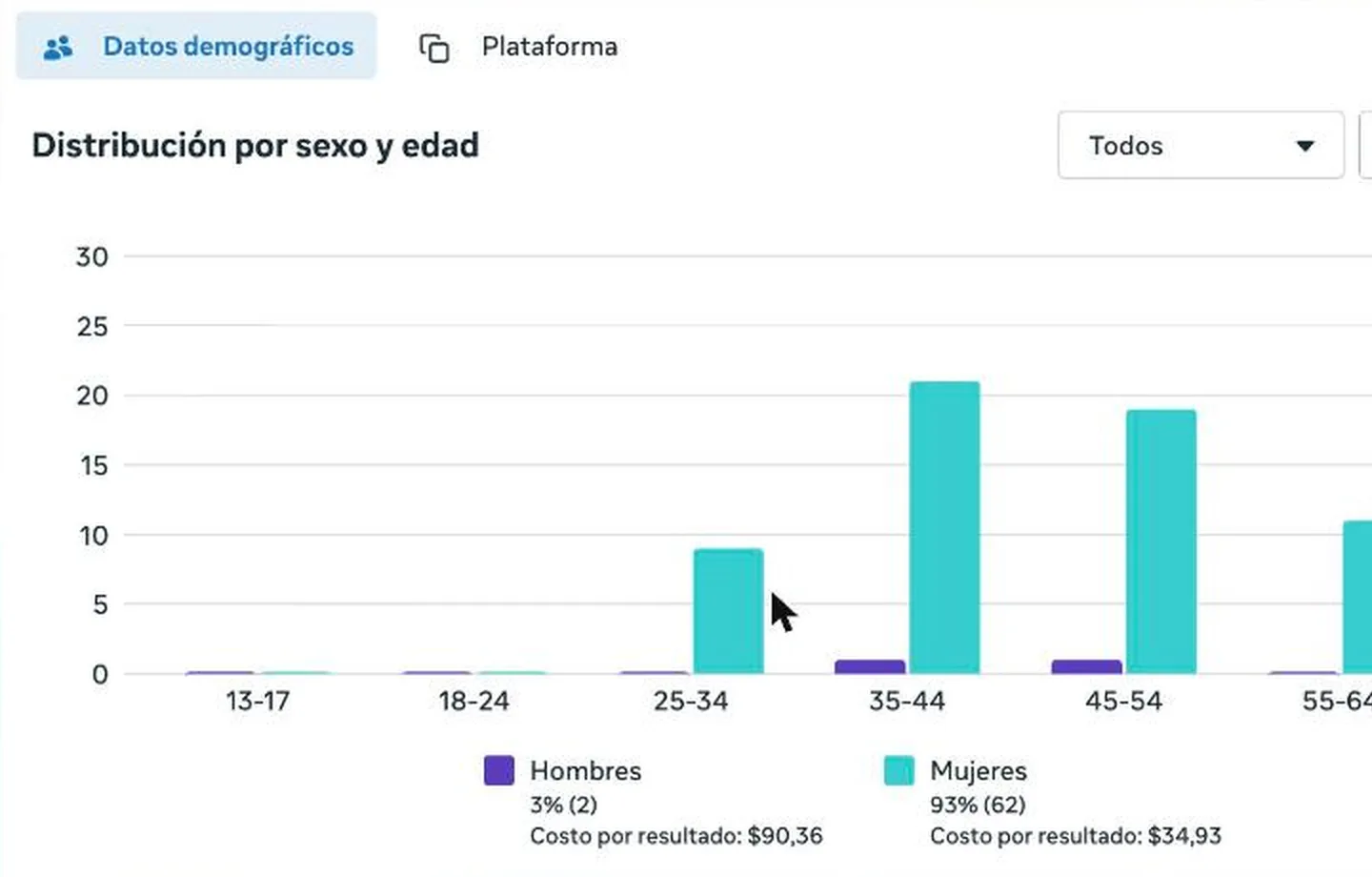
8 pages with the Meta Ads Manager screenshots, the campaign structure, results by ad set and by ad, the buyer profile and how purchases were measured.
Yes, when the campaign is optimized for purchases and the market is warmed up first. In this case, an in-person masterclass in Puerto Rico sold 67 tickets at $35.81 each, with a 2.30x ROAS, in a five-week sales window.
In this campaign the sales phase cost $35.81 per ticket. Including the $269.74 warm-up phase, the blended cost was $39.84 per ticket. Costs depend on the market, the ticket price, the creative and the tracking setup.
In this case it paid off. A $269.74 video reach campaign reached 266,207 people, and the people who watched the most video later bought at $24.99, 42% cheaper than the cold audience ($43.33).
This campaign started the warm-up about six weeks before the event (October 1) and ran ticket sales for five weeks, until the day before the event on November 12.
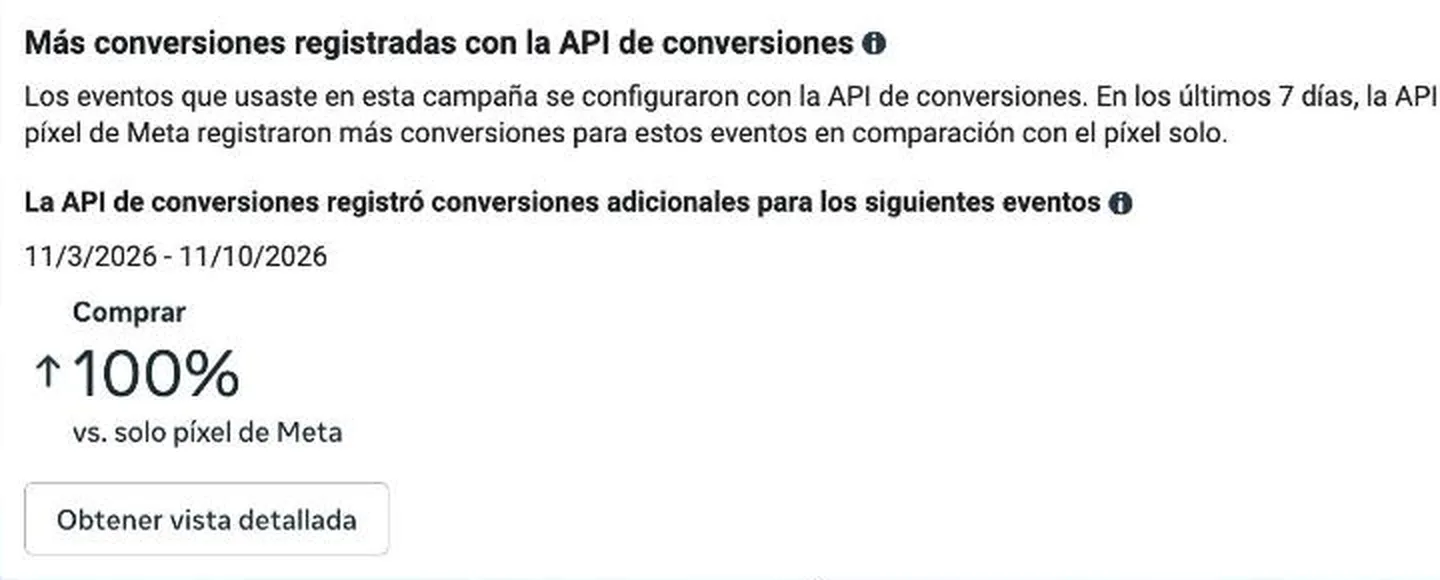
Between November 3 and 10, Meta reported that the Conversions API recorded 100% more purchases than the pixel alone. Without it, a large share of ticket sales would have gone unrecorded and the algorithm would have optimized on incomplete data.
Purchase value and ROAS reflect ticket sales reported by the Meta pixel and Conversions API, with 7-day click attribution. They do not include product sales made during the event.
In a strategy session we review your market, your offer and your tracking, and tell you clearly what results are realistic for your case. See our Meta Ads management services, the med spa marketing case study or the home services Meta Ads case study.
Book a Free Strategy CallMethodology: data pulled from Meta Ads Manager on November 12, 2026 (Maximum date range; all activity between October 1 and November 11, 2026). Attribution: 7-day click. Purchase value and ROAS reflect ticket sales reported by the Meta pixel and Conversions API and do not include product sales made during the event. Past results do not guarantee future results.