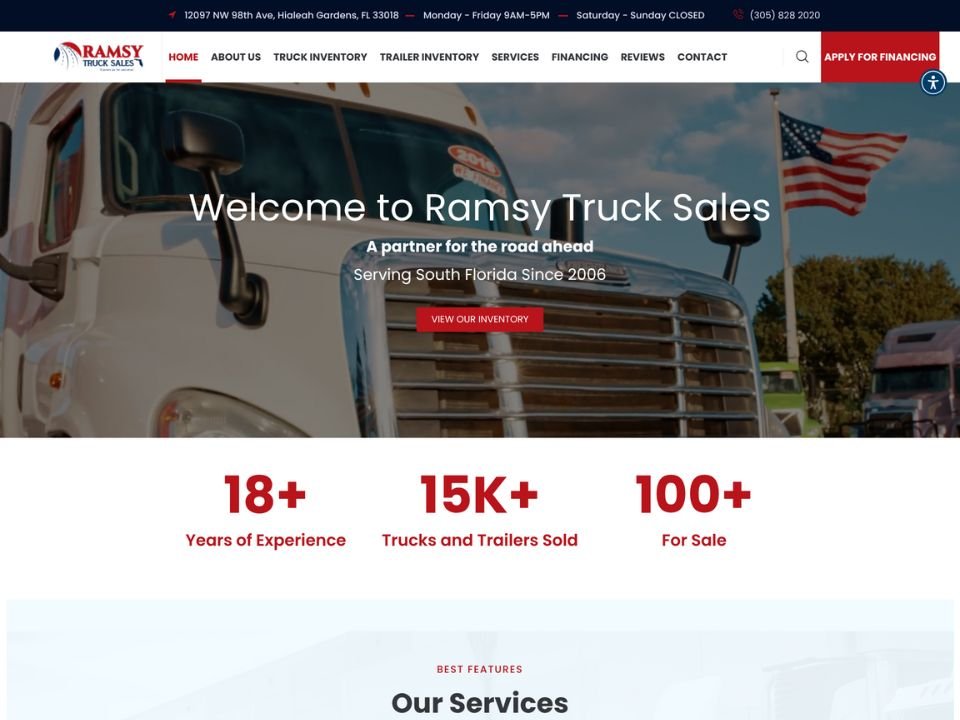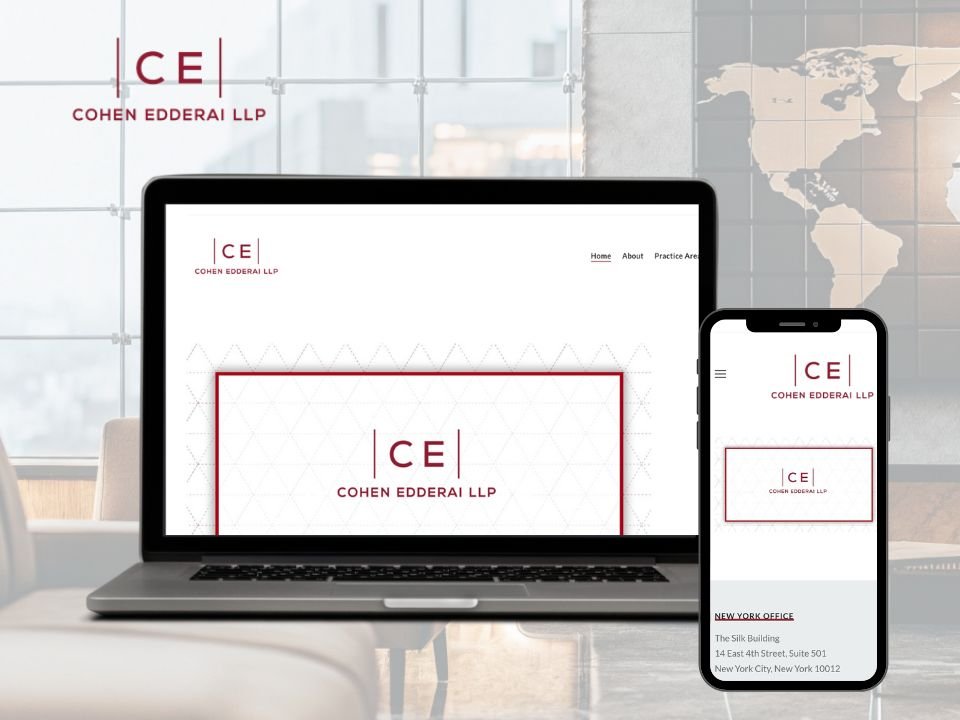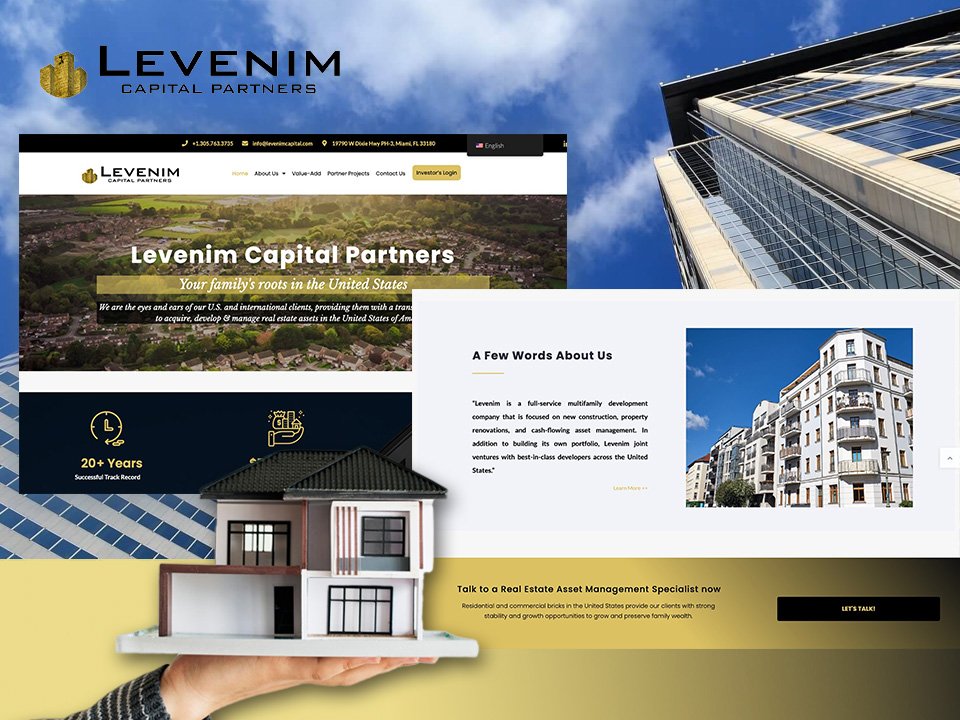
If your business already has a website but it still isn't producing calls, quote requests, bookings, or qualified leads, the problem usually isn't that you “need a nicer site.” The problem is that your site was built like a brochure instead of a sales system.
That matters more in Miami than most owners realize. You're competing in a crowded local market, buyers are checking you on mobile, and they often decide whether to trust you before they ever speak to your team. A weak site doesn't just sit there doing nothing. It actively makes your SEO, Google Ads, Local SEO, and reputation efforts less effective.
If you're comparing providers for web design miami services and you want a website that supports lead generation instead of just looking polished, this is the standard to use. If you already know your site is underperforming, you can start by requesting professional feedback for website design.
Table of Contents
- Your Miami Website A Pretty Brochure or a Customer Magnet
- Why Most Web Designs Fail in Miami's Competitive Market
- The Blueprint for a High-Converting Website
- The VIP TECH Process From Discovery to Dominating Local Search
- What Is Included in Your Web Design Miami Partnership
- Your Questions About Professional Web Design Answered
Your Miami Website A Pretty Brochure or a Customer Magnet
A lot of Miami businesses have the same problem. The website looks clean, the branding feels modern, and the owner assumes the digital side is handled. Then the phone stays quiet, contact forms barely move, and paid traffic lands on pages that don't persuade anyone to act.
That disconnect is expensive because design shapes trust before your sales process ever begins. In Miami's competitive market, 94% of first impressions are design-related, and 75% of users judge credibility based on website design, according to this Miami web design analysis. If the site feels dated, confusing, slow, or generic, visitors don't wait around for your credentials.
The bigger issue is strategic. A brochure site answers “who are we?” A customer magnet answers “why should I contact you now?” Those are not the same thing.
A website should reduce hesitation at every step. If it adds friction, your marketing budget has to work harder to get the same lead.
For service businesses, that means the homepage can't be a vanity piece. It needs a clear offer, service-area relevance, strong trust cues, and a path to action that doesn't make visitors hunt for it. For local companies running Google Ads or trying to rank in map results, the website is the conversion layer that determines whether traffic turns into revenue.
A polished design still matters. But without conversion structure, local search intent, and clear calls to action, it becomes decoration.
Here’s the practical difference:
- Brochure website: Looks nice, says a few generic things, collects occasional low-intent inquiries.
- Customer magnet: Matches buyer intent, supports SEO and paid campaigns, answers objections, and drives calls or form submissions.
- Growth-ready site: Gives you a platform you can test, improve, and scale instead of rebuilding again when leads flatten.
If your current site feels more like an online business card than a lead engine, you're already losing ground to firms that treat their website as the center of their marketing.
Why Most Web Designs Fail in Miami's Competitive Market

Most failed websites don't fail because the colors were wrong. They fail because the build started with aesthetics and ended before strategy began.
That shows up constantly in Miami. A law firm in Brickell, a med spa in Coral Gables, or a home service company covering North Miami can all have attractive sites that still don't produce leads. The layout may impress the owner. It doesn't necessarily help a searcher who wants fast answers, local proof, and an obvious next step.
The wrong starting point
A graphic-first process usually asks questions like:
- Brand preference: What style do you like?
- Visual direction: Which competitor site looks appealing?
- Homepage feel: Should it be sleek, bold, or minimalist?
Those questions aren't useless. They're just incomplete.
A strategist starts somewhere else:
- Search intent: What is the prospect looking for right before they contact you?
- Lead path: What page should convert a Google Ads click versus an organic local visitor?
- Trust threshold: What does a skeptical buyer need to see before calling?
When those questions don't guide the build, the final site often looks finished but performs poorly.
What breaks performance
The most common issues are practical, not theoretical. Businesses approve websites that are hard to use on phones, bury service-area signals, overload pages with animations, or use templates that make speed optimization difficult. If that's happening on your site, improving website loading speed is usually one of the first fixes worth making.
Miami buyers are impatient. They compare fast. They leave fast too.
According to the same Miami market analysis cited earlier, 50% of small businesses lose clients because of outdated or poorly functioning websites, and 72% of local consumers prefer companies with modern, easy-to-use sites. That isn't just a design critique. It's a revenue warning.
The market doesn't reward the business with the prettiest homepage. It rewards the business that makes the next step easiest.
Why this gets worse with SEO and ads
When a site is weak, every traffic channel suffers.
| Traffic source | What visitors expect | What a weak site does |
|---|---|---|
| Google Search | Relevant service page and local relevance | Sends them to vague pages with weak intent match |
| Google Ads | Fast page, clear offer, immediate trust | Burns spend on clicks that don't convert |
| Google Business Profile | Consistent local information and easy contact | Creates friction between maps listing and website |
| Referrals | Quick validation that you're credible | Makes referred prospects second-guess the business |
A site doesn't need to be flashy. It needs to remove doubt, support visibility, and make contacting you feel easy.
The Blueprint for a High-Converting Website

A high-converting website isn't one big trick. It's a stack of decisions that work together. Miss one layer and the rest of your marketing has less power.
For most Miami businesses, the strongest builds combine user experience, technical SEO, local relevance, and conversion design from day one. If you want a useful outside perspective on the mechanics, this guide to building an SEO-friendly website is a solid reference because it connects structure, search visibility, and site performance in practical terms.
Traffic without structure doesn't convert
A lot of sites get this backwards. They chase traffic first, then wonder why inquiries stay flat.
The structure has to support intent. That means:
- Clear page roles: Your homepage, service pages, location pages, and landing pages shouldn't all try to do the same job.
- Visible calls to action: “Contact us” in the navigation isn't enough. The page should guide the visitor toward one primary action.
- Trust placement: Reviews, certifications, photos, FAQs, and proof points need to appear before hesitation spikes.
A user arriving from “near me” searches behaves differently than a user searching your brand name. Your site should reflect that. If every visitor lands on the same generic page, you're forcing different buyer types through the same conversion path.
Practical rule: Every important page should answer three questions fast. What do you do, who do you help, and what should the visitor do next?
Speed is a marketing issue
Design teams sometimes treat speed as a technical cleanup item. It isn't. It's part of the offer.
When pages load slowly, users leave before your copy, offer, and trust signals even get a chance to work. Core Web Vitals matter here because they affect both user experience and search performance. According to this technical SEO resource on Core Web Vitals optimization, agencies that systematically improve these metrics have achieved up to 347% traffic growth.
In practical terms, speed work usually includes:
- Image control: compression, sizing, modern formats
- Code cleanup: minification, script management, critical CSS
- Platform discipline: avoiding bloated plugins and unnecessary effects
- Mobile testing: checking how pages behave on real phones, not just desktop previews
If a site is slow, your SEO team fights harder for rankings and your paid media team pays for clicks that bounce.
Local intent has to be built into the site
A Miami website that ignores local search behavior usually underperforms, even if the visual design is strong.
A strong local structure often includes:
- Service-area language that matches how people search.
- Google-friendly page organization so each service has a relevant destination.
- Conversion-focused local pages that support calls, form fills, and map visibility.
- Tracking setup so you can see which pages and channels generate leads.
For teams that want the site to work as a lead asset instead of a static project, a practical website conversion guide helps frame what should be measured after launch.
A high-converting website doesn't ask design, SEO, and CRO to take turns. It makes them work together on the same page.
The VIP TECH Process From Discovery to Dominating Local Search

Most business owners don't need more theory. They need to know how a website goes from “we should fix this” to a launch that effectively supports search visibility, paid traffic, and lead generation.
The process matters because bad projects usually break in predictable places. Strategy is rushed. Design is approved before conversion paths are clear. Development prioritizes visuals over speed. Launch happens without tracking, testing, or a local search plan.
Discovery starts with revenue questions
A serious process doesn't begin with mockups. It begins with business model clarity.
That includes questions like:
- Which services are most profitable
- Which locations matter most
- Which leads are worth pursuing
- Which traffic sources need landing pages
- Which objections stall conversions
Local SEO and paid media thinking should already be in the room. A website for a law office, roofing company, clinic, or restaurant has to account for how people search locally and how they compare providers before reaching out.
One practical option for businesses that need that alignment is working with a provider that combines web strategy with local SEO services for small businesses. VIP TECH CONSULTING offers that type of integrated work as part of its Miami service mix, along with development, paid media, and ongoing website support.
If the agency can't explain how the site will support local rankings, map visibility, and lead flow, you're buying design without distribution.
Design decisions follow buyer behavior
Once the business goals are clear, the next step is shaping pages around user intent instead of personal taste.
That usually means separating page types instead of blending everything into one oversized homepage. Service pages need focused messaging. Location relevance needs to appear naturally. Calls to action need to match the stage of the buyer. Someone searching a high-intent service term behaves differently from someone clicking an Instagram ad.
A strong process usually includes a review of:
| Page type | Primary goal | Common mistake |
|---|---|---|
| Homepage | Establish relevance and trust | Trying to rank and convert for everything at once |
| Service page | Match a specific intent | Staying too generic to rank or persuade |
| Location page | Support local visibility | Copying the same text across areas |
| Landing page | Convert paid traffic | Sending ad clicks to standard site pages |
Design also has to account for friction points. Forms that ask too much. Buttons that disappear on mobile. Headlines that sound polished but vague. Navigation that makes users think too hard.
Launch is where real optimization starts
At this stage, many agencies stop too early.
They deliver the site, hand over logins, and move on. The business is left with something that looks complete but hasn't been refined against actual user behavior. That gap matters because post-launch performance is where a lot of lead loss gets exposed.
A more disciplined launch includes:
- Analytics installation: so calls, forms, and channel performance can be tracked
- Search readiness checks: indexing, metadata, structure, crawlability
- Core page testing: mobile behavior, form flow, CTA visibility, page speed
- Local consistency review: messaging alignment across website and business listings
- Ongoing iteration: adjusting pages when friction appears
Some pages need A/B testing. Others need simpler offers, tighter copy, or stronger proof. Sometimes the design isn't the problem at all. The problem is that the page asks for trust before it has earned it.
That's why the best web design miami engagements don't end at launch. They turn the website into a managed asset that supports SEO, paid traffic, and conversion improvements over time.
If a provider can't tell you what happens after launch, ask harder questions before signing.
What Is Included in Your Web Design Miami Partnership

One of the biggest reasons owners delay hiring an agency is uncertainty. They don't know what they're buying, what gets handled for them, or what will still fall back on their team after the contract is signed.
That uncertainty is fair. A lot of web proposals sound complete while leaving out the pieces that affect rankings, lead quality, and post-launch usability.
Core build and marketing foundation
A serious website partnership should include more than design comps and development time.
Typical deliverables should cover:
- Custom site build: WordPress or Shopify setup based on the business model, not agency preference.
- Mobile-first layouts: Pages built for the way local prospects browse and contact businesses.
- Conversion-focused page structure: Home, service, about, contact, and campaign pages designed around action.
- Technical setup: Indexing basics, crawl support, metadata framework, security essentials, and performance configuration.
If the proposal treats SEO as an add-on after launch, that's a warning sign.
Visibility and lead capture setup
Often, many “design packages” get thin. The website may launch, but the marketing infrastructure doesn't.
A stronger scope usually includes:
- On-page SEO for core pages: Keyword alignment, headings, internal structure, and search-friendly copy direction.
- Local intent integration: Service areas, local relevance signals, and clear relevance for “near me” searches.
- Lead tracking: Forms, calls, analytics events, and conversion measurement.
- Google Business Profile alignment: The website should support your local presence, not conflict with it.
That last point matters because, for service businesses, a fragmented presence across the site, business profile, and paid campaigns creates friction. DesignRush's Miami web design agency coverage highlights the importance of integrating web design with Google Business Profile and local paid strategy so prospects don't hit inconsistent messaging and leave.
A website isn't finished when it goes live. It's usable when search traffic, ad traffic, and local profile traffic all land on pages built to convert.
For businesses reviewing staffing options, this is also where the difference between a page builder contractor and a dedicated web developer becomes more obvious. The issue isn't just coding. It's whether the person building the site can support speed, scalability, tracking, and marketing functionality without patchwork fixes later.
What clients usually want clarified before signing
These are the practical items worth asking about before any agreement:
- Content responsibilities: Who writes what, who edits, and who approves final copy.
- Revision process: How feedback is gathered and how many review rounds are included.
- Platform ownership: Who controls hosting, domains, CMS access, and integrations.
- Post-launch support: What happens after handoff if issues appear or performance lags.
- Campaign readiness: Whether the site is ready for Google Ads, Local SEO, Meta Ads, and reputation workflows.
When those answers are clear, buyers feel less risk. That's a major reason better agencies win more often than cheaper ones. They remove ambiguity before the project starts.
Your Questions About Professional Web Design Answered
Business owners who are close to hiring usually ask good questions. Cost, timing, DIY alternatives, and ROI all deserve direct answers.
Is a professional website actually worth it
If your site is only there for appearance, probably not. If it's being used to support SEO, Google Ads, local visibility, and lead generation, yes, it usually becomes one of the most important assets in your marketing stack.
The website is where intent turns into action. Ads can generate clicks. Local SEO can generate visibility. Your reputation can earn attention. But the site still has to convert the visit into a call, form submission, booking, or sale.
Can you just use a cheap builder
You can, and for very simple brochure sites that may be enough for a while.
The problem starts when you need stronger local SEO, faster pages, custom landing pages, cleaner tracking, or more control over conversion paths. Cheap builders often feel convenient early and restrictive later. Businesses then pay twice. Once to launch fast, and again to rebuild when growth stalls.
The cheapest website is often the one that creates the most expensive missed opportunities.
What should you expect on cost and selection
Price ranges vary widely in Miami because the work being sold varies widely too. According to this Miami web design market overview, there are over 1,069 web design companies competing for attention, and average project costs range from $2,000 to over $100,000. That spread tells you something important. Not every provider is solving the same problem.
Use this quick filter when comparing agencies:
- If you need a brochure site: lower-cost options may be fine.
- If you need leads from search or ads: ask how they handle CRO, Local SEO, page speed, and tracking.
- If you need long-term growth: ask what happens after launch and who manages iteration.
- If you need accountability: ask how communication works, what deliverables are included, and how performance gets reviewed.
If you'd like more clarity before deciding, review these web design and digital marketing FAQs and then compare providers using the same criteria.
The right question isn't “Who can build a website?” Plenty of companies can.
The better question is “Who can build a website that supports revenue?”
If your current site isn't helping you rank, convert, or support your ad spend, it's time to fix the actual bottleneck. VIP TECH CONSULTING helps Miami businesses build websites that support Local SEO, paid traffic, and lead generation with a practical, performance-first approach. If you're close to making a decision, book a strategy session and get clear on what your site needs before another month of traffic slips away.