
If your practice has strong clinical care but too many open appointment slots, the problem usually isn’t medicine. It’s visibility, trust, and follow-through. Patients are searching for care right now, and the practices that appear first with the right message often get the call.
That’s why google ads for doctors isn’t just an advertising channel. It’s a patient acquisition system when it’s built correctly, and an expensive leak when it’s not. A professional setup matters because medical PPC has more moving parts than most local campaigns: intent-based keywords, landing page quality, front-desk workflow, conversion tracking, and compliance.
If you’re comparing agencies or deciding whether to keep managing campaigns in-house, this guide will help you spot the difference between activity and actual patient growth. If you want a strategy built around booked appointments instead of empty clicks, the fastest next step is to schedule a consultation with VIP TECH CONSULTING.
Table of Contents
- Why Your Waiting Room Is Quiet While Competitors Thrive Online
- Building Your Patient Acquisition Engine with Google Ads
- Crafting Ads and Landing Pages That Build Trust and Get Appointments
- The VIP TECH Consulting Playbook for Medical Practices
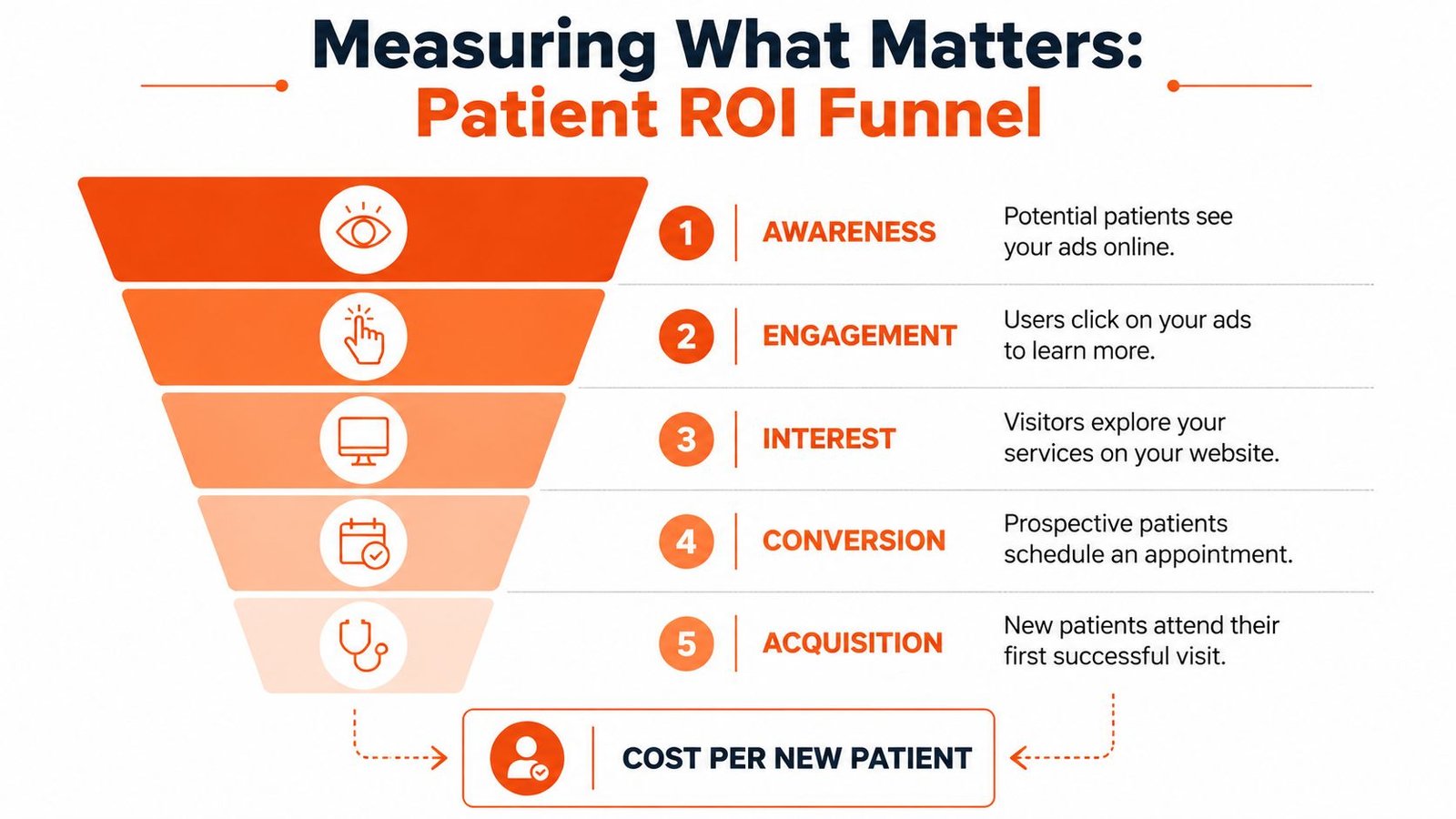
- Measuring What Matters Tracking Patient ROI Not Just Clicks
- Advanced Strategies and Navigating Google’s Compliance Maze
- Your Questions Answered About Google Ads for Doctors
Why Your Waiting Room Is Quiet While Competitors Thrive Online
A common scenario looks like this. The physician is respected, referrals are steady but inconsistent, and the schedule has random gaps that shouldn’t exist. Meanwhile, another practice across town keeps showing up when patients search for urgent answers, new patient availability, or specialty care near them.
That gap isn’t accidental.
Patients rarely begin with loyalty. They begin with a search. They type symptoms, treatment names, insurance-related questions, and location-based queries. If your practice isn’t visible at that moment, the patient often books with whoever made the decision easier.

What’s happening behind the scenes
Hospital systems, multi-location groups, and aggressive private practices aren’t waiting for referrals alone. They’re buying intent. They’re showing up for searches tied to immediate care decisions and using strong landing pages to turn that traffic into calls and appointments.
That changes the competitive field in three ways:
- They intercept urgency: A patient searching for a doctor nearby usually wants action now, not later.
- They remove friction: Click-to-call, insurance messaging, maps, and appointment prompts reduce hesitation.
- They build perceived credibility fast: Even before a patient visits the site, the ad itself signals availability and relevance.
The practice with the best care doesn’t always win the patient. The practice that appears at the right moment and makes booking easy often does.
Why this hurts more than most managers realize
An empty chair in a medical practice isn’t just unused capacity. It’s lost production, wasted staff time, and a quieter referral base down the line. One missed patient can mean a missed follow-up visit, missed ancillary services, and a lost long-term relationship.
This is why DIY campaigns disappoint so often. They focus on impressions and basic clicks, but they don’t solve the core business problem. You don’t need more traffic from people browsing. You need qualified patients who are ready to book and likely to show.
If that’s the issue you’re trying to fix, keep reading. The right Google Ads structure changes the economics of patient acquisition, and it starts with the campaign architecture.
Building Your Patient Acquisition Engine with Google Ads
Most practices think of PPC as “running ads.” That mindset causes sloppy execution. The better model is a patient acquisition engine. Every part has to support the next one: keyword intent, campaign structure, ad relevance, landing page match, and tracking.

Healthcare search campaigns perform well when they’re aligned with patient intent. In fact, medical practices see average click-through rates between 3.27% and 6.11%, above the general Google Ads average of 1.91%, and some optimized healthcare campaigns reach 4% to 5% CTR according to Harvee Healthcare’s benchmark summary.
Search intent beats broad visibility
The first mistake many practices make is bidding on broad terms that sound important but attract mixed traffic. Terms like “doctor,” “clinic,” or even a specialty alone can burn budget without producing enough appointment-ready leads.
A professional build starts with tighter intent. That usually means terms closer to decision-making, such as a specialty plus location, service plus location, or availability-focused searches. It also means separating campaigns by service line so budget doesn’t drift toward the easiest clicks instead of the most valuable appointments.
A strong structure usually includes:
- Service-specific ad groups: Separate treatment categories instead of lumping everything into one campaign.
- Location modifiers: City names, neighborhood names, and “near me” behavior matter for medical demand.
- Negative keywords: These filter out low-fit searches that waste budget and distract the front desk.
- Capacity-based prioritization: Promote the services your practice can fulfill profitably and consistently.
For local reach, geography shouldn’t be an afterthought. It should be deliberate. A campaign aimed at the wrong radius or the wrong neighborhood can send low-quality inquiries from areas your practice doesn’t serve well. Given these challenges, Google Ads location targeting for local campaigns becomes operational, not just technical.
Choose campaign types based on patient behavior
Not every Google campaign type plays the same role. Search usually carries the strongest immediate intent. Local visibility supports map-based discovery. Display can help with awareness or reminder-based exposure, but it’s rarely the first place a medical practice should expect appointment-ready leads.
A simple decision view looks like this:
| Campaign type | Best use | Main caution |
|---|---|---|
| Search | Capturing active demand from patients already looking | Broad keywords waste spend fast |
| Local and map-connected visibility | Supporting nearby searches and immediate action | Requires accurate business data and message consistency |
| Display | Reinforcing awareness and retargeting site visitors | Can generate attention without strong booking intent |
A lot of wasted spend comes from picking the wrong campaign type too early. Search usually deserves the first serious investment because it captures people already trying to solve a medical need.
Here’s a helpful walkthrough on medical PPC strategy before scaling further:
The practical takeaway is simple. Good campaigns don’t start with ad copy. They start with the right patient, the right search, and the right local targeting rules.
Crafting Ads and Landing Pages That Build Trust and Get Appointments
Clicks are easy to misread. In medical advertising, a click only matters if the person feels safe enough to take the next step. That means the ad has to set expectations properly, and the landing page has to make booking feel clear, credible, and low-friction.
Trust starts before the click
Medical ad copy works when it sounds precise, calm, and useful. It usually fails when it sounds exaggerated, vague, or salesy. Patients aren’t looking for hype. They’re looking for reassurance that this practice handles their problem, accepts action now, and won’t waste their time.
Strong medical ads usually do a few things well:
- Name the service clearly: Patients should know whether the ad is for primary care, dermatology, cardiology, urgent care, or a procedure line.
- Reflect real intent: If the keyword suggests urgency or new-patient demand, the message should match that.
- Use practical extensions: Call buttons, location details, and review signals help the patient act without extra searching.
- Avoid risky claims: Medical PPC has to stay compliant and grounded. Overpromising weakens trust and can create policy issues.
Practical rule: The ad should answer the patient’s first question before they click, not create three new questions after they land.
The landing page decides whether the lead becomes a patient
A lot of practices don’t have an ad problem. They have a post-click problem. Traffic arrives, but the page is too general, too slow, or too distracting. That’s where patient acquisition breaks.
Poor campaign architecture can produce 50 leads and still end with only a 24% show-up rate, meaning just 12 patients come in, as discussed in NKP Medical’s Google Ads guidance for doctors. That’s not just a lead quality issue. It’s often a message match issue, a form issue, or a weak follow-up issue.
A medical landing page should feel narrower than a homepage. It should match one service, one audience, and one main action.
Key elements that help:
- A direct headline: State the service and location clearly.
- Visible appointment paths: Calls, forms, and booking actions should be obvious without scrolling forever.
- Insurance and access details: If relevant, address common practical concerns quickly.
- Provider credibility: Include physician details, review signals, or patient-focused trust elements.
- Short forms: Long forms create hesitation. For a useful breakdown of what makes forms easier to complete, BuildForm’s guide to lead forms is worth reviewing.
For practices that need a stronger conversion path, a purpose-built page matters more than a generic website layout. This is the difference between a brochure site and a lead-generation system. If you’re evaluating the structure itself, this reference on how to build a lead generation website is directly relevant.
The right approach isn’t about making the page flashy. It’s about making the patient feel confident enough to act now.
The VIP TECH Consulting Playbook for Medical Practices
By the time a practice manager looks for outside help, the usual pain points are already familiar. Spend feels unpredictable. Reporting is vague. The front desk says lead quality is inconsistent. The website gets traffic, but booked appointments don’t move enough.
A managed medical PPC engagement should remove that uncertainty. It should create a system your team can operate around.
What a managed engagement should include
A serious process for google ads for doctors should cover planning, buildout, tracking, and ongoing optimization. The work is not just inside Google Ads. It touches intake, landing pages, analytics, messaging, and local search visibility.
A complete engagement typically includes:
- Initial audit and strategy: Review existing account history, search terms, service priorities, local targeting, and patient acquisition bottlenecks.
- Campaign architecture: Build by specialty, service, and geography so budget flows toward the queries that matter most.
- Landing page alignment: Match each campaign to a dedicated conversion path instead of dumping traffic onto a broad homepage.
- Tracking setup: Connect calls, forms, and appointment actions so reporting reflects real outcomes.
- Ongoing management: Review search terms, refine negatives, test ad copy, adjust bids, and monitor lead quality with the practice team.
- Reporting and communication: Use plain-English reporting that ties ad activity back to booked opportunities, not vanity metrics.
One option practices often evaluate for this work is Google Ads management for lead-driven businesses, which covers campaign setup, optimization, and ROI-focused execution across local markets.
Why practice managers choose done-for-you execution
This usually comes down to effectiveness.
A physician shouldn’t be checking search term reports between patients. A practice manager shouldn’t be troubleshooting conversion paths while also handling scheduling, staffing, and intake issues. Even a capable in-house coordinator usually doesn’t have time to manage keyword control, ad testing, landing page revisions, and weekly optimization at the level medical PPC requires.
If the campaign, the website, and the front desk aren’t aligned, the ad account becomes a very efficient way to pay for confusion.
The right partner helps in practical ways. They tighten targeting so the front desk handles better inquiries. They make reporting understandable. They spot waste early. They keep the account moving instead of letting it drift for months under the label of “learning.”
That’s why experienced practices usually stop asking whether they can technically run ads themselves. They ask whether self-management is the highest-value use of their team’s time. Most of the time, it isn’t.
Measuring What Matters Tracking Patient ROI Not Just Clicks
A campaign can look busy and still underperform. High impressions, decent click volume, and plenty of traffic don’t tell you whether the ads are producing patients who show up.
For a medical practice, measurement has to move through the full chain: click, call or form, appointment request, booked visit, completed visit. Anything less leaves too much guesswork.
The metrics a medical practice should actually watch
Healthcare Google Ads campaigns average an 8.09% conversion rate for appointment bookings, and practices can use the formula (Revenue from new patients – Ad spend) / Ad spend to calculate ROI, while aiming for $30 to $50 per appointment against patient lifetime value, according to Whitecoat’s guide for doctors using Google Ads.
That matters because it shifts the conversation away from “How many clicks did we get?” to “What did it cost to acquire an actual appointment?”
Track these as a minimum:
- Qualified calls: Not every phone call is a lead. Wrong specialty, wrong insurance, and spam muddy the picture.
- Form submissions: Useful, but only if they connect to actual scheduling outcomes.
- Appointment bookings: A stronger signal than leads alone.
- Completed visits: At this point, acquisition becomes revenue.
- Cost per appointment: This helps compare channel efficiency over time.
A clean reporting setup usually depends on analytics, tag management, and event tracking working together. If your account still can’t reliably attribute calls and forms, start with a proper Google Analytics 4 setup for lead tracking.
How to think about ROI before you scale spend
The smart question isn’t “Can we spend more?” It’s “Can we turn more of what we already buy into completed visits?”
Often, campaigns stall due to these issues. The account may generate leads, but the handoff to the practice is weak. Calls aren’t answered fast enough. Forms are too vague. Follow-up is delayed. Landing page language doesn’t prepare the patient for the next step.
For teams tightening that follow-up process, this resource on measuring marketing campaign effectiveness with Call Loop offers a practical lens for connecting marketing activity to actual responses and outcomes.
If you want a realistic projection for your own practice, don’t start with generic benchmarks. Start with your service mix, average patient value, booking process, and close rate. That’s the basis for a real decision. If you’re actively comparing providers, this is the point where a strategy call pays for itself.
Advanced Strategies and Navigating Google’s Compliance Maze
Medical PPC gets harder when a practice moves beyond basic search campaigns. That’s where many agencies get thin. They can launch ads, but they struggle with the ecosystem around them: remarketing logic, map visibility, local service trust signals, and healthcare compliance rules.

Growth tactics that support local medical demand
A strong local acquisition system doesn’t rely on one touchpoint. Search ads capture active demand, but support layers matter. Remarketing can re-engage site visitors who weren’t ready on the first visit. A fully optimized Google Business Profile strengthens local trust and helps with branded and “near me” behavior. In some markets, local service visibility also supports practices that need stronger map-adjacent presence.
For practices evaluating local ad placement beyond standard search campaigns, Google Local Services Ads for service-area visibility is part of that broader conversation.
A few advanced tactics often make the difference:
- Remarketing with discipline: Useful for re-engaging prior visitors, but it has to be implemented carefully in healthcare settings.
- Tighter service-line segmentation: Different specialties need different messages, landing pages, and intake paths.
- Business profile alignment: The ad, the landing page, and the local listing should reinforce the same trust signals.
Compliance mistakes that interrupt patient flow
Many campaigns become fragile at this point.
For many medical services, Google requires a Google health certificate, and the review process can take 5 to 30 business days, with first-submission rejection rates of up to 40%. Ongoing HIPAA compliance on landing pages is also critical, and 62% of healthcare advertisers report issues that can lead to suspension, according to Anirup’s review of Google Ads for doctors and compliance hurdles.
That changes the risk profile of the entire channel. A campaign isn’t just judged on performance. It can also be delayed, limited, or interrupted by policy issues.
Compliance isn’t a legal footnote in medical PPC. It directly affects whether your ads stay live and whether your tracking setup is safe to use.
Practices should review ad content, form fields, tracking behavior, and landing page data handling with the same seriousness they give budget allocation. If your team is comparing workflow tools around governance and documentation, this overview of compliance software for healthcare operations is a useful operational reference.
The business case for professional management gets stronger here. Every day an account is delayed, flagged, or suspended is a day patients search, click, and book elsewhere.
Your Questions Answered About Google Ads for Doctors
How much should a medical practice budget for Google Ads
There isn’t one universal number that fits every specialty or market. The right budget depends on your service mix, location, intake capacity, and how well your landing pages convert. A serious agency won’t throw out a generic number before reviewing your goals and your local competition.
What matters more than the starting budget is whether the account is built to protect spend. Tight targeting, good tracking, and service-level prioritization matter more than spending more.
How long does it take to see new patients
You can usually see early signals before you see stable results. Calls, form submissions, and appointment activity can start relatively quickly when the account is well built, but a trustworthy read takes time because the system needs data, follow-up feedback, and optimization.
What delays results most often isn’t Google. It’s weak landing pages, slow intake response, unclear messaging, or compliance-related setup issues.
Can an office manager run this instead of an agency
An office manager can absolutely help coordinate it. That’s different from owning the strategy and daily optimization. Medical PPC requires keyword control, bid management, ad testing, tracking accuracy, landing page decisions, and compliance awareness. That’s a real specialty.
If your office manager already carries scheduling, patient communication, insurance coordination, and admin work, adding campaign management usually means one of two things happens: the ads get neglected, or the rest of the office work does.
The smarter model is shared responsibility. Your internal team owns intake and patient handling. Your PPC partner owns the platform, the optimization process, and performance accountability.
If your practice is already at the stage where you know you need help, the next move is simple. Contact VIP TECH CONSULTING for a strategy conversation focused on patient acquisition, tracking, and compliance. In a competitive market, waiting usually means paying for delays with missed appointments.