
A Miami Beach business launches a new site, the photos look sharp, the branding feels right, and then the same problem shows up a month later. Calls do not increase, booked appointments stay flat, and paid traffic keeps getting more expensive because the site is not built to convert.
If you're searching for web design miami beach, you're probably trying to fix that revenue problem.
In this market, a website has to do more than present the brand. It needs to support local visibility, lower wasted ad spend, and turn visits into calls, form fills, reservations, and qualified leads. Otherwise, web design becomes a sunk cost dressed up as a deliverable.
That is the mistake many local companies make. They hire a designer, approve mockups, launch the site, and assume growth will follow. It usually does not. The design may look polished, but if the page structure, local search signals, speed, messaging, and conversion paths are weak, the site works against Local SEO and paid traffic instead of supporting them.
The financial trade-off is simple. Spending on design without a plan for rankings and conversion usually means spending again later to repair the foundation. A better approach is to build the site around the activities that produce return, including Google Ads landing performance, local intent searches, and the systems that increase organic website traffic over time.
If your current site looks acceptable but is not producing business, the problem is rarely visual design alone. The problem is that the website was treated like a digital brochure instead of the engine behind your marketing.
Table of Contents
- Your New Miami Beach Website Is Live So Where Are the Customers
- Why Most Web Design Projects Fail to Generate Leads
- Our Integrated Web Design and Marketing Process
- What a Miami Beach Performance Website Includes
- Proof from Local Businesses We Have Helped
- Frequently Asked Questions About Web Design and SEO
- Get Your Free Miami Beach Growth Strategy Session
Your New Miami Beach Website Is Live So Where Are the Customers
A business owner in Miami Beach signs off on a redesign. The site looks clean. The photos are sharp. The brand feels more upscale. Then the first month passes, and nothing meaningful happens. No jump in calls. No increase in quote requests. No real lift in booked business.
That scenario is common because many redesigns solve the wrong problem. They fix appearance, not acquisition.
A nice site can still be a digital ghost town
Miami Beach is crowded online. Restaurants compete with other restaurants two blocks away. Law firms compete against firms with larger content libraries and stronger Google Business Profiles. Service businesses fight for the same map visibility and the same high-intent search traffic.
If your website wasn’t built around search demand and conversion paths, it won’t produce much even if it looks expensive.
Common signs you bought design without performance:
- Traffic lands but doesn’t convert: Visitors browse and leave because the calls to action are weak or buried.
- The site isn’t search-ready: Service pages aren’t structured around what local customers search for.
- Paid traffic leaks out: Google Ads and Meta Ads send clicks to pages that weren’t designed to turn interest into action.
- Mobile users get frustrated: Navigation, load time, and booking flow break down on phones, where local intent is strongest.
A website isn’t a finished product at launch. It’s the foundation your SEO, PPC, and local visibility sit on.
That’s why a redesign often disappoints. The owner expected business growth. The agency delivered visual improvement.
What smart buyers look at before they hire
The right question isn’t “Can they make it look modern?” It’s “Can they build something that supports rankings, ad efficiency, and conversion?”
A serious website for Miami Beach should support:
- Local search intent: service pages, location relevance, and proper content structure
- Lead flow: forms, calls, booking paths, and landing page logic
- Campaign readiness: pages that can support Google Ads and retargeting without wasting spend
- Ongoing optimization: the ability to test, refine, and improve instead of rebuilding again next year
If that gap sounds familiar, review this guide on increasing organic traffic to a website and then talk to a team that builds with traffic and conversion in mind from the start.
Why Most Web Design Projects Fail to Generate Leads
Most web design projects fail because the build is treated like a creative deliverable instead of a sales system.
A Miami Beach owner signs off on a redesign, the new site looks sharper, and nothing changes in the pipeline. Calls stay flat. Form fills stay flat. Paid traffic still bounces. The problem usually is not effort. It is build logic.
Good-looking sites still lose money
A polished interface does not fix weak page structure, slow load times, confusing service positioning, or a contact path that asks too much too soon. Those issues cut into lead volume before SEO or ad performance has a fair shot.
That matters more in Miami Beach than in slower markets. Search intent is local, mobile, and impatient. A visitor who cannot confirm, within a few seconds, that you serve their area, solve their problem, and offer a clear next step will leave and pick the next option.
Core Web Vitals, mobile usability, and conversion flow matter because they affect what happens after the click. Rankings without lead flow are vanity. Traffic without conversion logic is a tax.
The build order is usually backwards
A lot of design firms still follow a process that creates expensive rework:
- Design page layouts first
- Build the site
- Add SEO after launch
- Send paid traffic to pages that were never built to convert
That sequence burns budget because the hard decisions were skipped at the start.
Service pages should be mapped to real search demand before design begins. Layouts should account for headline hierarchy, local relevance, internal linking, trust signals, and conversion paths before development starts. Ad landing pages should be planned separately when the offer, audience, or call to action differs from organic traffic intent.
I see the same pattern over and over. Owners pay once for the redesign, then pay again to fix missing service pages, weak copy, broken tracking, poor mobile behavior, and landing pages that should have existed from day one.
If you're diagnosing a low-performing site, this breakdown of Website Not Generating Enough Leads gives a useful outside perspective on where websites usually fail after launch.
Lead generation has to be built into the page, not added later
This is the part many agencies miss. Design choices affect revenue.
If the hero section looks clean but does not answer what you do, who you serve, and what the visitor should do next, conversions drop. If every service is buried under one generic page, local SEO gets weaker. If forms ask for too much information on mobile, completion rates fall. If calls, booking actions, and trust proof are placed low on the page, intent leaks out.
A website that produces ROI is built for three jobs at once. It needs to earn the click, confirm relevance fast, and move the visitor into action.
That is why a redesign by itself is often a sunk cost. The return usually comes from the activities the website should support after launch, especially SEO, Google Ads, and conversion testing. If the site is not built as the foundation for those channels, the marketing program becomes less efficient from day one.
For a practical breakdown of how pages turn visits into inquiries, review this website conversion guide.
Our Integrated Web Design and Marketing Process
A Miami Beach business launches a new site, likes the design, and then waits for the phone to ring. Nothing changes because the build was treated like a branding project instead of a revenue system.
That mistake gets expensive fast.
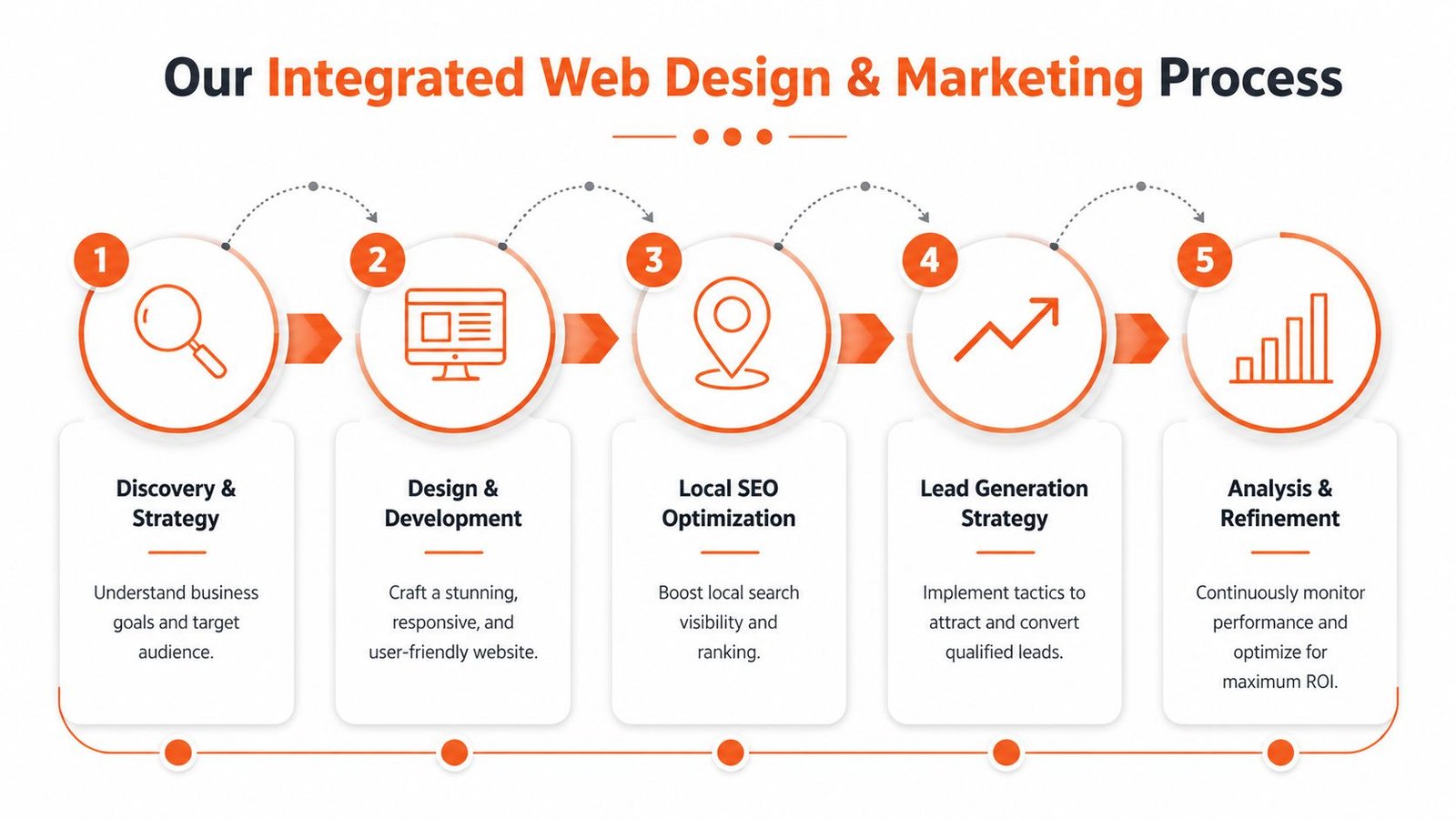
Strategy starts before design
The process starts with demand, not mockups. A business owner does not need more pages. They need pages that can rank, support ad traffic, and turn visits into calls, form fills, bookings, or purchases.
That changes the questions at the start of the project.
Before design begins, the work should define:
- Search mapping: how Miami Beach customers look for the service
- Page prioritization: which services need standalone pages because they can bring in qualified traffic
- Competitive review: where competitors are winning local visibility and where they are exposed
- Conversion planning: which actions matter most to the business and where those actions should appear on the site
I have seen companies approve a beautiful redesign that left no room for service-page depth, no landing page structure for Google Ads, and no clear path for lead attribution. At that point, design is just a cost. The return comes from the channels the site is supposed to support after launch.
Build for visibility and conversion
Once strategy is clear, build decisions need to protect revenue.
For Miami Beach businesses, responsive design and accessible structure are business requirements. A large share of local search traffic comes from mobile users, and accessibility lawsuits continue to hit Florida businesses. If a site is hard to use on a phone or fails basic accessibility standards, some visitors leave immediately and some businesses take on avoidable legal risk.
A performance-focused build usually includes:
- Mobile-first layouts: built for fast decisions on smaller screens
- Accessible page structure: readable contrast, alt text, keyboard access, and clear heading hierarchy
- Clean internal linking: direct paths to high-value service and location pages
- Trust placement near action points: reviews, credentials, and proof positioned where buyers hesitate
- Clear conversion paths: one primary next step per key page instead of scattered options
This is the trade-off many agencies do not explain. A design-first process can produce a site that looks polished in a presentation but underperforms in search, wastes paid traffic, and creates friction at the point of contact. An integrated process builds the site so SEO, content, UX, development, and media buying can all work from the same structure.
Launch with traffic in mind
Launch is the start of acquisition, not the end of the project.
The site should go live with local SEO inputs in place, tracking configured, landing pages prepared for paid campaigns, and a clear plan for what gets tested first. If call tracking, form tracking, and attribution are missing, the business cannot tell which pages are producing revenue and which ones are just taking up space.
For companies that need the website tied directly to inquiries, lead generation funnel planning should be part of the build. VIP TECH CONSULTING is one example of a firm that handles web development, Local SEO, paid media, and ongoing support in one workflow, which keeps the website and the marketing campaigns aligned instead of forcing different vendors to patch problems after launch.
A simple question exposes the gap when you are evaluating providers. Ask how the new site will improve rankings, ad efficiency, and conversion rate within the first few months. If the answer stays focused on visuals, the process is incomplete.
What a Miami Beach Performance Website Includes
A Miami Beach website has to do more than look current on launch day. It has to convert expensive traffic, support local visibility, stay fast on mobile, and keep working when weather or infrastructure problems hit the area. Otherwise, the design fee becomes a sunk cost and the marketing budget has to carry a site that was never built to sell.
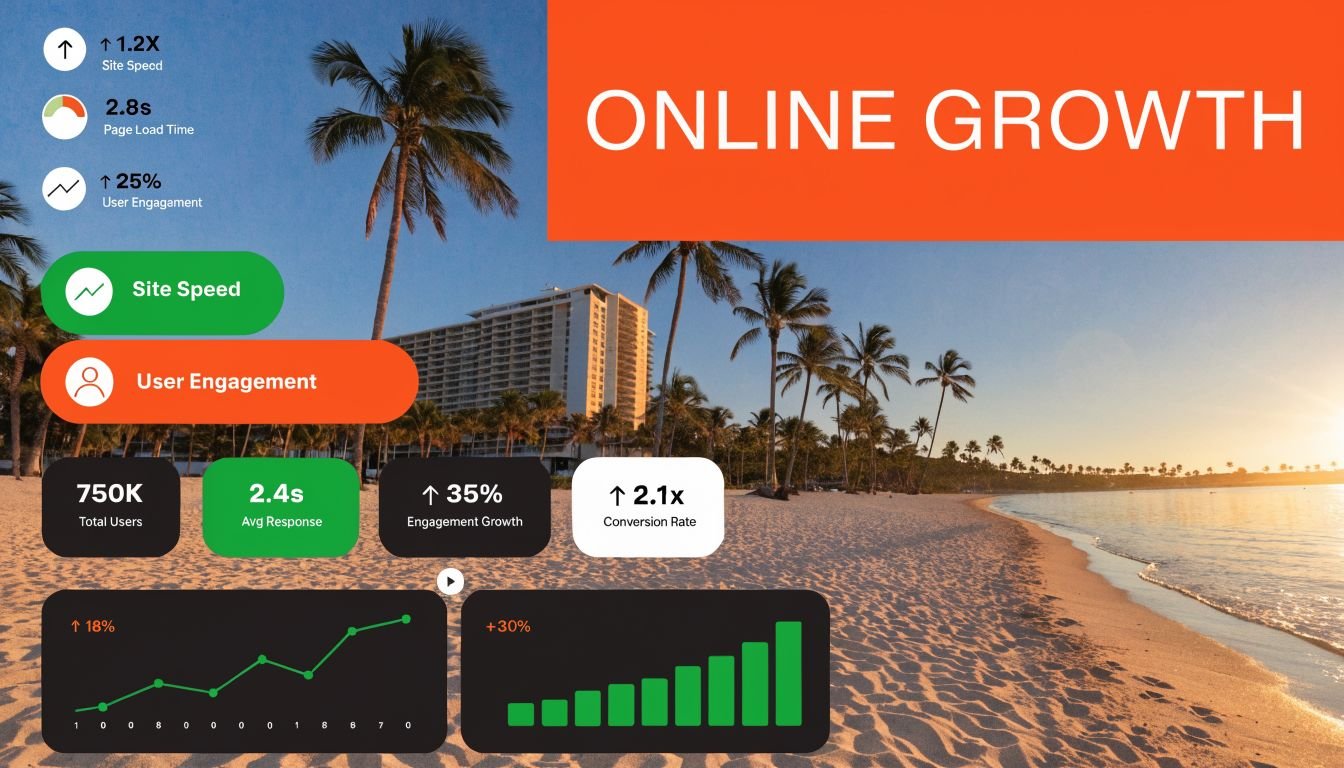
The features that actually matter
The best-performing builds share the same foundation. They are engineered around lead flow, not aesthetics alone.
Here’s what that includes in practice:
- Storm-resilient hosting setup: Miami Beach businesses need hosting configured for failure, not just speed tests. That means CDN distribution, backup redundancy, uptime monitoring, and a documented failover plan so the site stays available during outages and peak-stress periods.
- Localized content structure: Service pages should match how people search by neighborhood, service type, urgency, and language context. Strong SEO localization strategies help businesses capture demand from residents, tourists, and bilingual buyers without stuffing pages with generic city terms.
- Fast loading architecture: Heavy video, oversized images, page builders, and third-party scripts drag down both rankings and conversion rates. A lean build with clean code, compressed media, and controlled script loading gives users a faster path to action. This guide on improving website loading speed is a useful reference for tightening performance.
- Booking and lead capture logic: Calls, forms, reservation requests, quote requests, and map actions should be easy to find and easier to complete. Every extra field and every unclear CTA lowers response volume.
- Campaign-ready landing pages: Google Ads traffic should not land on a generic homepage. Dedicated pages aligned to search intent, offer, location, and device type usually produce better conversion data and lower wasted spend.
The trade-off is simple. A brochure site can be cheaper upfront. A performance site costs more because it is built to support SEO, paid traffic, and sales activity from day one.
What the investment should look like
Miami Beach pricing is higher because the business risk is higher. Rent is high. Competition is high. Click costs are high in many local categories. If the website cannot convert, every other channel gets less efficient.
That is why I treat the website as operating infrastructure. It needs the right page architecture, tracking, conversion paths, local relevance, and technical resilience before a business sends more traffic into it.
A business that only needs an online placeholder has cheaper options. A business that wants more calls, bookings, and qualified leads needs a website that works as the foundation for revenue. In Miami Beach, that integrated approach is the one that makes financial sense.
Proof from Local Businesses We Have Helped
A redesigned site should produce a business result. More booked tables. More qualified calls. More direction requests from people ready to buy.
That is the standard I use when judging local web work in Miami Beach.

Hospitality and multilingual conversion
Hospitality makes the impact easy to see because the gap between traffic and revenue shows up fast. A restaurant can have solid search visibility and still lose reservations if the site forces users to guess, translate, pinch-zoom, or hunt for the next step on mobile.
In Miami, language context matters. Buyers often compare options in both English and Spanish, sometimes within the same session. A site built for one language and one user path leaves revenue on the table. The fix is not adding more design flair. It is structuring pages so the offer, menu, location, and booking action match how local customers decide.
A useful example is this Chai Wok Miami restaurant website project. What matters in projects like this is not the color palette by itself. It is how the page structure supports discovery, trust, and action for a real local business.
That is the difference business owners care about.
What these projects had in common
The local businesses that saw traction from a new website tended to make the same practical choices:
| Focus area | What worked |
|---|---|
| Page intent | Core pages matched clear customer goals such as booking, calling, finding the location, or reviewing the menu or service details |
| Mobile action | Tap targets were obvious, forms were short, and high-intent actions were available without extra scrolling |
| Message clarity | Visitors could understand the offer, the area served, and the next step within seconds |
| Localized relevance | Copy reflected Miami neighborhoods, audience language preferences, and real buying context instead of generic brand language |
| Post-launch updates | Teams kept testing headlines, calls to action, and page layouts after launch instead of treating the site as finished |
I have seen the opposite pattern too. A business pays for a site that looks current, then has to rebuild landing pages, tracking, local content, and conversion paths once SEO or Google Ads start. That is why typical web design becomes a sunk cost. The site was never built to support revenue channels in the first place.
Frequently Asked Questions About Web Design and SEO
A Miami Beach business can launch a new site, turn on SEO or Google Ads, and still wonder why calls do not increase. The problem usually is not traffic alone. It is that the site was built like a design project instead of a sales system.
Is a custom website worth it
If the website needs to support Local SEO, paid search, and lead generation, a custom build usually pays for itself.
Templates are fine for a placeholder site. They break down when you need service-area pages, campaign landing pages, clean tracking, fast mobile performance, and clear paths to call, book, or request a quote. The actual cost is not the build. It is paying for traffic that hits a page that was never designed to convert.
How long does it take to see results
Some results show up right away. If the new site removes friction, more visitors call, submit forms, or reach key pages without getting lost.
SEO takes longer because rankings build over time and depend on competition, content, and site authority. Google Ads can generate clicks much faster, but speed is irrelevant if the landing page is weak. A site should be ready to convert before traffic spending starts.
Can my team manage the site after launch
Yes, if the build was planned properly from the start.
Your staff should be able to update copy, change photos, post new content, and handle normal page edits without opening a support ticket every time. That said, technical SEO, tracking setup, page-speed work, and landing page testing usually need a specialist. The handoff matters. A site that is easy to edit but easy to break creates a different kind of cost.
Why not hire a cheaper freelancer
A lower price can make sense for a one-page site or a short-term project. It gets expensive fast when no one owns the strategy after launch.
The common failure point is not design quality by itself. It is fragmentation. One person builds the site, another sets up ads, someone else handles SEO, and no one is accountable for conversion rates, tracking accuracy, or lead quality. When results stall, each vendor blames the other system.
That is why integrated execution makes financial sense. The website, SEO structure, landing pages, analytics, and ad intent need to work together. Otherwise, you save money on the build and lose it later in wasted clicks, weak rankings, and missed leads.
Get Your Free Miami Beach Growth Strategy Session
A website in Miami Beach shouldn’t be a design expense that sits there and waits. It should help you rank locally, convert paid traffic, capture demand on mobile, and keep working when competitors go offline or underperform.
That’s the standard serious businesses should expect.
If your current site isn’t producing enough calls, leads, consultations, or reservations, the issue usually isn’t that you need a prettier redesign. You need a website built to support Local SEO, Google Ads, conversion strategy, and long-term optimization in one system.
The businesses that move first usually gain the advantage. The ones that delay often keep spending money on traffic, referrals, and brand awareness without fixing the asset that should be converting all of it.
Book a free Miami Beach growth strategy session if you want a clear view of what’s broken, what should be rebuilt, and how your website can support revenue instead of draining budget.
Need a website that supports SEO, Google Ads, and lead generation instead of acting like a brochure? Contact VIP TECH CONSULTING to request a quote or schedule a strategy session.