


If you’re struggling with how to increase organic traffic to your website, you’re not just missing out on clicks. You’re losing money. Every day your site remains invisible on Google, potential customers searching for your exact services are finding and paying your competitors instead.
Most businesses invest in a website hoping it will be a 24/7 lead machine, only to find it sits there silently, costing them money. Choosing the wrong provider or trying to cut corners on SEO can cost you thousands in lost revenue and wasted opportunities. The problem isn’t that SEO doesn’t work; it’s that generic, outdated strategies fail to deliver real business results.
Why Your Website Is Invisible and What It’s Costing You
Does your website feel like a ghost town? You’re not alone. Many business owners have a site that looks great but fails at its most critical job: bringing in new customers. This digital invisibility is a silent profit killer.
Every day, customers in your area are searching for “plumber near me” or “best local attorney.” If your website isn’t optimized to appear for these high-intent searches, you’re not even in the game. You’re handing business directly to your competition.
The Real Price of Poor SEO
The cost of neglecting your SEO—or hiring an inexperienced provider who uses ineffective tactics—is staggering. It’s not just about missed calls; it’s about tangible financial losses that compound over time.
Here’s what you’re actually losing:
- Lost Revenue: Every lead that finds a competitor’s site first is a direct hit to your bottom line. Over a year, this easily adds up to thousands, or even tens of thousands, of dollars in lost sales.
- Wasted Marketing Spend: Running ads that point to a slow or confusing website is like pouring water into a leaky bucket. You pay for every click, but the poor user experience prevents visitors from converting.
- Damaged Brand Credibility: When customers can’t find you on Google, or they land on a site that’s unprofessional, it erodes trust before you’ve even had a chance to earn it.
Too many business owners fall into the trap of thinking any website will do. They hire a cheap provider who builds a slick-looking site that’s a technical disaster under the hood, full of outdated SEO tricks that Google now penalizes. This leads to frustration and the mistaken belief that SEO is a scam.
The hard truth is that a website that doesn’t actively generate organic traffic is little more than a digital business card. It’s a cost center, not a growth engine.
The Path to Sustainable Growth
Turning this around requires a professional, results-driven strategy. Increasing organic traffic isn’t a one-time fix; it’s a continuous process of building a powerful foundation that generates leads month after month. A winning strategy moves beyond generic advice and focuses on ensuring your website is discovered by search engines and built to persuade visitors to contact you.
If you’re tired of watching your website underperform, it’s time to stop guessing and start building a real lead-generation asset. Contact our team for a consultation, and let’s map out a plan to turn your site into the powerful growth tool it was always meant to be.
Start with a Technical SEO Audit: The Foundation of Your Growth
Before we talk about content or ads, we need to look under the hood. If you want to increase organic traffic to your website, the first step is a professional technical SEO audit.
Think of it like this: you can have the most beautiful car, but if the engine is broken, it’s not going anywhere. Your website is the same. Many business owners have a site that looks fantastic but generates zero leads because of hidden technical problems that act as a stop sign for Google. A technical SEO audit is our diagnostic tool to find and fix these invisible barriers to your growth.
What Does “Technical SEO” Actually Mean for Your Business?
Don’t let the term “technical SEO” intimidate you. It boils down to one thing: making sure Google can find, understand, and trust your website enough to show it to people searching for your services. It’s about ensuring your site is fast, secure, and user-friendly.
Take Core Web Vitals, for example. These aren’t just scores for developers; they directly measure a real person’s experience on your site. A slow-loading page doesn’t just frustrate a potential customer—it signals to Google that your site provides a poor experience, which directly hurts your rankings and sends that customer to a competitor.
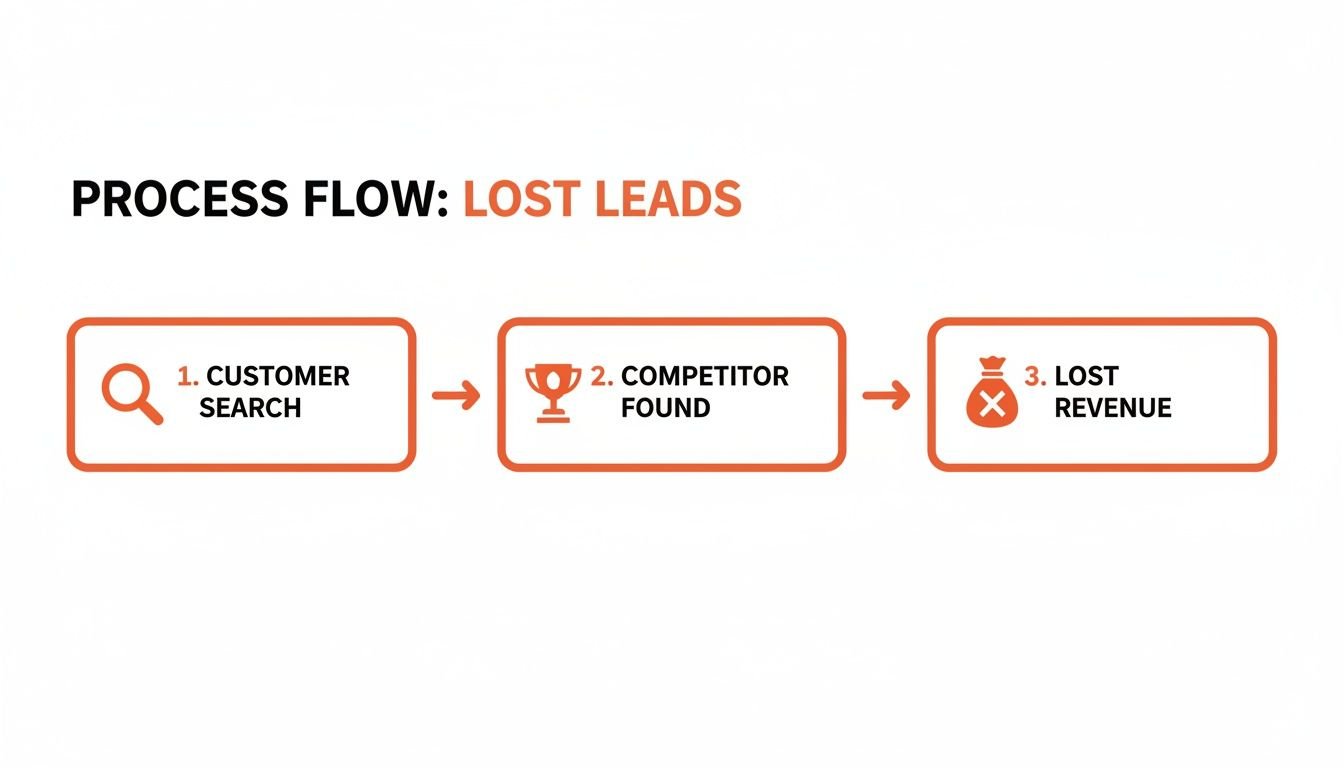
As you can see, when your website has technical flaws, a ready-to-buy customer’s search ends with your competitor getting paid.
How Site Performance Directly Impacts Your Bottom Line
Let’s make this real. A potential customer in Miami is on their phone, searching for a service you offer. They tap your link, and… nothing happens. The page takes too long to load, so they hit the back button and click on the next result. This happens constantly and is a massive, silent revenue killer.
Optimizing your site’s Core Web Vitals isn’t a “nice-to-have.” According to Google, sites that meet performance standards keep visitors longer and can achieve significantly higher conversion rates. With over half of all web traffic coming from mobile devices, and most users leaving if a page takes more than three seconds to load, speed is money.
A technical audit isn’t about chasing a perfect score. It’s about finding the critical issues that are costing you customers and creating a priority plan to fix them, starting with what matters most.
A professional audit almost always uncovers problems a business owner had no idea existed, such as:
- Crawlability Problems: Sections of your site may be invisible to Google.
- Slow Page Speed: We pinpoint the exact causes, from large images to bloated code.
- Poor Mobile Experience: Your site might look “okay” on a phone but be difficult to use.
- Broken Links & Redirects: These digital dead-ends frustrate users and hurt your site’s authority.
Fixing these fundamentals is the only way to build sustainable growth. To see what this looks like, you can see what a professional site review uncovers in this real-world example. Without a clean bill of technical health, any money you spend on content or ads is being wasted.
Crafting a Content Strategy That Captures Ready-to-Buy Customers
Once your website is technically sound, it’s time to focus on what truly drives business: your content. This isn’t about blogging for the sake of it. It’s about strategically creating content that attracts people who are actively searching for your services and are ready to make a purchase.
Think of your website’s content as your best salesperson, working 24/7. It answers urgent questions, solves problems, and convinces potential customers that you are the right choice.
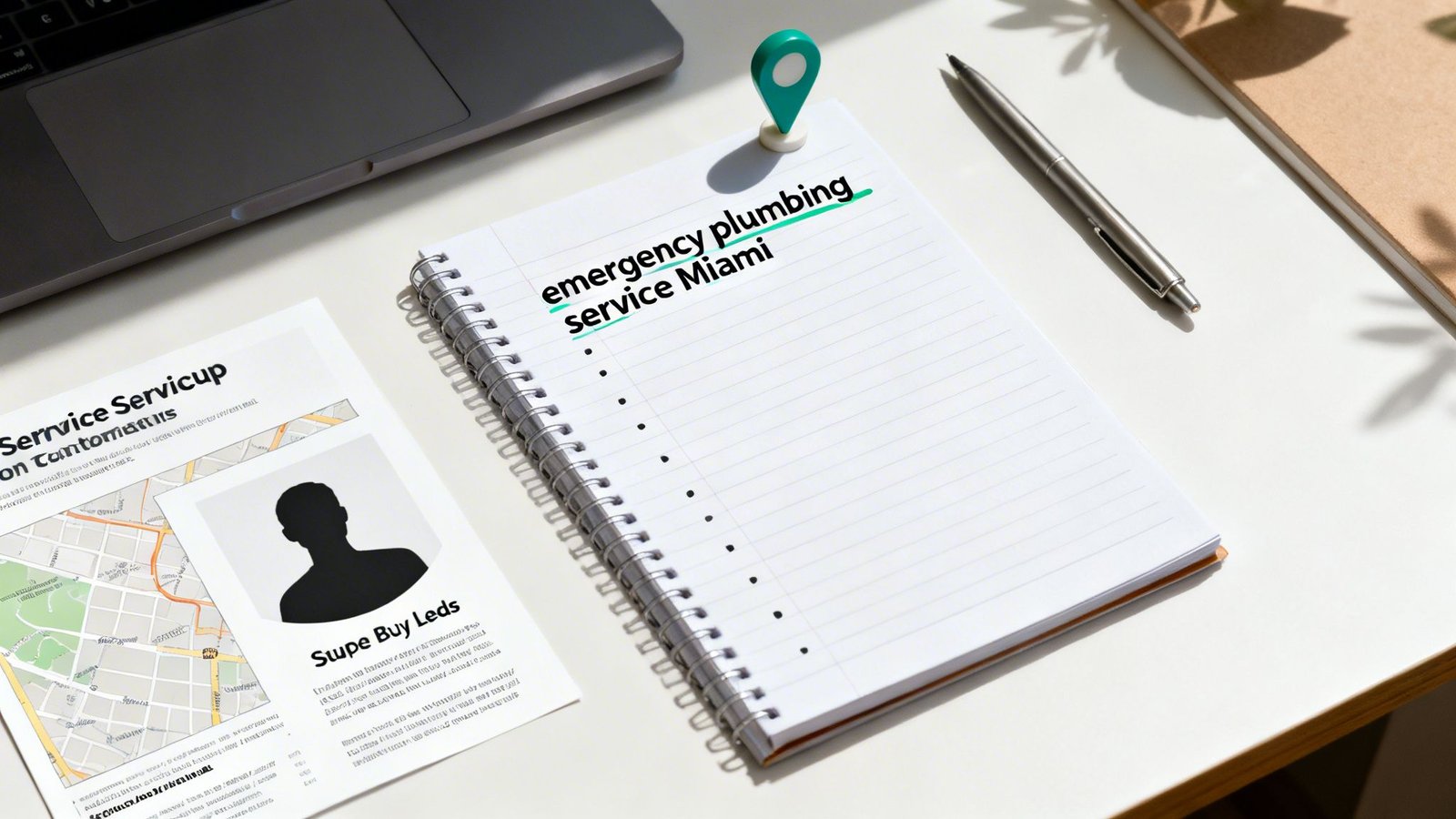
From Casual Browsers to Commercial Keywords
Here’s where most businesses go wrong. They target broad keywords that generate traffic but no customers. The secret is focusing on high-intent, commercial keywords that signal a buyer is ready to take action.
For example, a local plumber should focus on:
- Low-Intent Keyword: “how to fix a leaky faucet” (DIY searcher)
- High-Intent Keyword: “emergency plumbing service Miami” (Ready-to-hire customer)
Your content strategy must be laser-focused on these high-intent keywords. This is how local businesses turn their websites into lead-generation machines. A local roofer, for example, will generate more business from a page targeting “hail damage roof repair Dallas” than from a generic blog post about roofing materials.
Building Content That Both Answers and Sells
Once you’ve identified these valuable keywords, you need to create content that completely satisfies the searcher’s needs and builds immediate trust.
Here are content formats that convert visitors into leads:
- In-depth Service Pages: Don’t just list a service. Detail exactly what it includes, who it’s for, and why you are the expert. For a local financial advisor, a page on “retirement planning services” should outline the process, benefits, and common client scenarios.
- Hyper-Local Blog Posts: Answer questions your local audience is asking. An HVAC company in Phoenix could write, “What Size AC Unit Do I Need for a Phoenix Home?” to instantly establish local authority.
- Case Studies and Project Galleries: Nothing sells like proof. Showcasing real-world examples of your work gives potential customers the confidence to choose you.
This approach doesn’t just inform; it builds trust and guides visitors toward contacting you. To see more examples, check out some of our proven content marketing strategies designed to boost your online presence.
High-quality content isn’t a marketing expense—it’s a long-term asset. A single, well-optimized service page can drive qualified leads for years, delivering an incredible return on investment.
Despite changes in search, the power of great content remains. Recent data shows organic search still accounts for a massive 40.65% of all website traffic. While challenges like zero-click searches exist, 38% of marketers agree that targeted content remains a top format for generating consistent SEO ROI. You can read the full research on organic search trends to understand the current landscape.
Matching Content to Customer Intent
| Search Intent | Example Keyword | Recommended Content Format | Business Goal |
|---|---|---|---|
| Informational | “how much does a new roof cost” | Blog post, guide, or calculator | Build trust, capture email leads |
| Commercial | “best roofing companies near me” | Comparison page, service page, reviews | Guide consideration, drive calls/quotes |
| Navigational | “[Your Company Name] reviews” | Testimonials page, Google Business Profile | Reinforce brand choice |
| Transactional | “emergency roof repair Austin” | Local service page, click-to-call buttons | Generate immediate leads |
By creating tailored content for each stage, you create a seamless journey that guides a curious searcher all the way to becoming a paying customer. A smart content plan is the engine of sustainable growth.
Getting Your On-Page SEO and Digital Authority Right
You can create the most brilliant content, but if Google can’t understand what it’s about, it will remain invisible. This is where on-page SEO comes in. It’s the process of structuring your content so search engines—and your customers—can easily find it.
Think of it as putting clear signposts on every page of your site. Getting these fundamentals right is a critical step in learning how to increase organic traffic to your website.
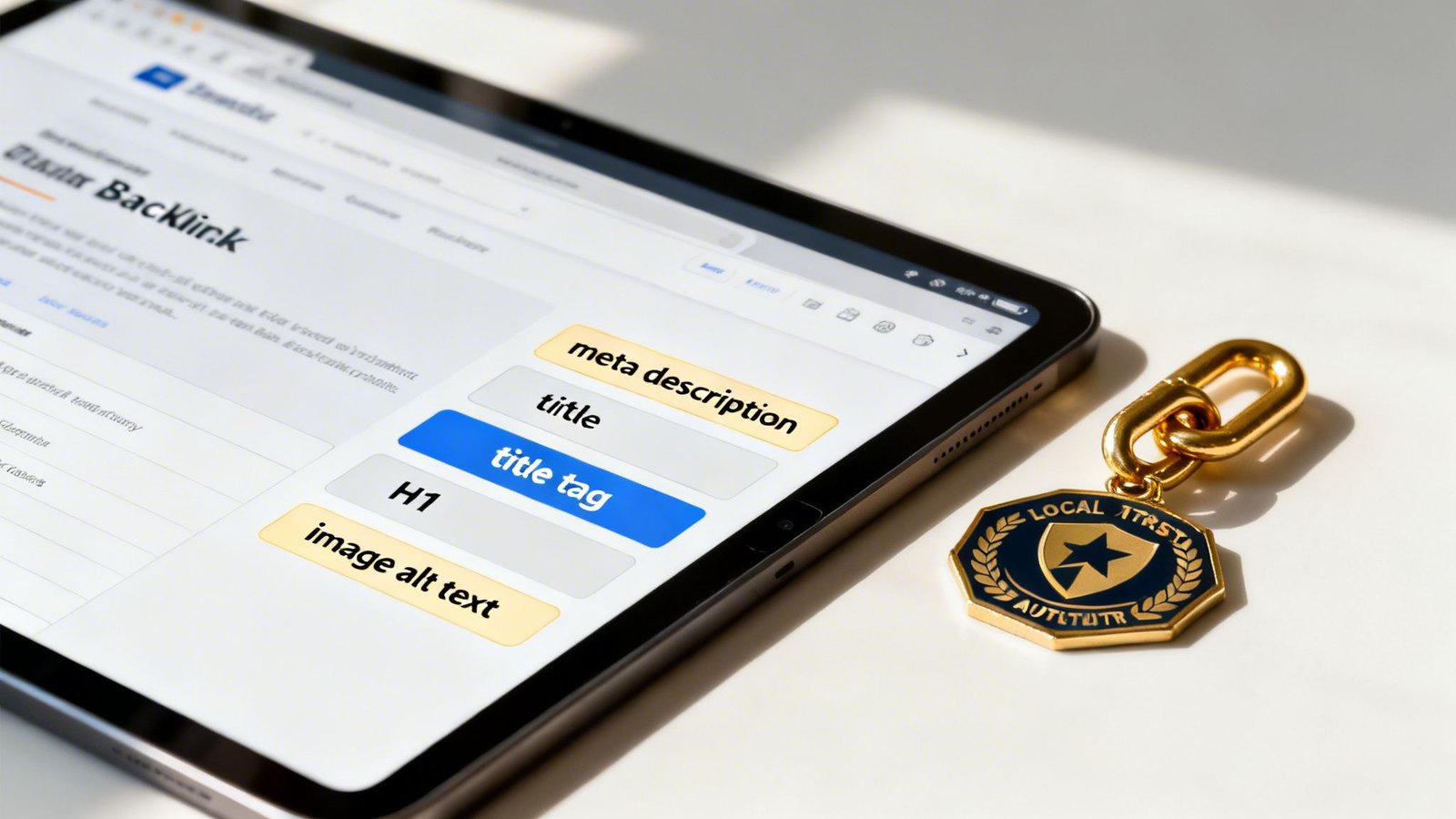
Nailing the On-Page Essentials
Let’s walk through a real-world scenario: optimizing a service page for a “family law attorney in Miami.” This isn’t theory; it’s the practical work that gets businesses found.
For every important page, these core elements must be dialed in:
- Title Tag: This is your page’s headline in Google search results. It must grab attention and include your main keyword, like “Family Law Attorney in Miami | Compassionate Legal Guidance.”
- Meta Description: This is the short sales pitch under the title. It’s your chance to convince a searcher to click your result over a competitor’s.
- H1 Heading: This is the main headline on the page. It should confirm the visitor is in the right place and contain the primary keyword (e.g., “Experienced Family Law Attorney Serving Miami-Dade”).
- Image Alt Text: This simple description for your images helps visually impaired users and tells Google what an image is about (e.g., “Miami family law attorney meeting with a client”).
To learn more about preparing your content for search engines, check out this guide on Optimizing Content for Search Engines.
A common mistake we see is keyword stuffing—cramming keywords into every spot. This outdated tactic doesn’t work. Your priority should always be writing for a human reader. The optimization should feel natural, not forced.
Building Trust with Backlinks
Once your pages are structured correctly, it’s time to build authority. In Google’s eyes, authority is largely built through backlinks—links from other reputable websites pointing to yours.
Every quality backlink acts as a vote of confidence. When a trusted site links to you, they are vouching for your expertise. Google counts these votes, and sites with more high-quality endorsements rank higher. But not all links are created equal. This is where cheap SEO providers often do more harm than good.
Why Link Quality Beats Quantity, Every Time
I cannot stress this enough: one high-quality backlink from a relevant, trusted website is worth more than hundreds of spammy, low-quality ones. In fact, cheap, irrelevant links can damage your reputation with Google and even lead to a penalty.
For our Miami law firm, a link from the Florida Bar Association’s website is SEO gold. It’s a powerful, relevant signal. A random link from a foreign blog, on the other hand, is useless at best and toxic at worst.
A professional link-building strategy isn’t about buying links; it’s about earning them through:
- Creating content so valuable that others naturally want to link to it.
- Building genuine relationships with journalists, bloggers, and local business leaders.
- Strategic outreach to get your business featured on relevant, high-authority sites.
This is how you build a defensible ranking that lasts. If you feel your current SEO efforts are hitting a wall, it might be time to unleash its full potential and transform non-converting traffic with a more sophisticated strategy.
When you combine perfectly optimized pages with a strong backlink profile, you create a powerful engine for driving qualified organic traffic. If this is the detailed approach your business needs, contact our experts for a consultation today.
Integrating Paid Ads for Accelerated Growth and Local Dominance
Waiting for SEO to mature can be frustrating when you need leads now. While building a solid organic foundation is crucial for long-term success, you don’t have to wait to get the phone ringing. This is where a smart paid advertising strategy comes in.
The most successful businesses use SEO and paid ads together. SEO builds sustainable, free traffic over time, while paid ads—like Google Ads and Meta Ads—deliver immediate, targeted traffic from day one. It’s the perfect way to jumpstart growth and gather valuable data instantly. For example, a local electrician can run a Google Ads campaign for “emergency electrician near me” to get immediate calls while their SEO strategy builds authority for that same term over time.
Why Paid Ads Are Your SEO Accelerator
Many see paid ads as an expense. We see them as a strategic investment that fuels your entire marketing engine. The way paid and organic search work together creates incredible momentum.
Here’s how they combine to increase organic traffic to your website more effectively:
- Find Your Winning Keywords Instantly: Instead of waiting months to see which keywords convert, a focused Google Ads campaign gives you that answer in days. You can test high-intent keywords, track which ones lead to calls, and then build your SEO content around those proven winners.
- Test Your Offers Without Guesswork: Have a new service or promotion? Use Meta Ads to test your messaging and offers with your ideal customer before investing heavily in SEO content. This saves time and money.
- Dominate the Search Results: When you appear in both the top ad spot and the top organic spot for a key search term, you build immense authority. Searchers see your name twice, reinforcing that you are the go-to expert.
This creates a powerful feedback loop. The data from paid campaigns makes your SEO strategy smarter and more efficient. To see how this is done, learn more about our results-driven approach to Google Ads for local businesses.
Master Your Local Market with Google Business Profile
For any local business, your Google Business Profile (GBP) is your most powerful tool for attracting “near me” searches. It’s often the first impression a customer has of your brand and is key to appearing in the Google Maps “Local Pack”—that coveted block of three businesses at the top of local search results.
We’ve seen local clients double their inbound phone calls simply by implementing a consistent and proactive Google Business Profile management strategy. It’s often the lowest-hanging fruit for immediate growth.
To capture this high-value traffic, focus on:
- Use Google Posts Weekly: Share updates and offers to show Google your business is active.
- Be a Review Management Machine: Actively request reviews and respond to every single one. A strong review profile is a massive trust signal.
- Perfect Your NAP: Your business Name, Address, and Phone number (NAP) must be 100% identical everywhere online, from your website to all directories.
Combining the immediate firepower of paid ads with a dominant local presence on Google creates a system that generates leads from all angles. You get the quick wins you need today while building the long-term authority that will pay dividends for years.
Answering Your Questions About Driving More Traffic
Investing in your website’s growth is a big decision, and you deserve clear answers. We understand you want to know what to expect and what a true partnership for growth looks like. Here are our straightforward answers to the most common questions we hear from business owners.
How Long Until I Actually See SEO Results?
The honest answer is: it depends. SEO is a marathon, not a sprint. While quick wins from technical fixes can show results in weeks, meaningful, sustainable growth in organic traffic typically takes four to six months to build.
This timeline depends on:
- Your starting point: A new website takes longer to gain traction than an established one.
- Your industry’s competitiveness: Ranking for “local bakery” is different from ranking for “personal injury lawyer.”
- The resources invested: Consistent, dedicated effort is what moves the needle.
Think of it like building a business. Foundational work comes first, but true success is the result of consistent effort over time.
Can I Just Do SEO Myself?
While you can learn the basics, the real question a business owner should ask is: “Is this the best use of my time?” DIY SEO is complex, time-consuming, and often leads to frustration because the rules are always changing.
A professional strategy involves deep technical analysis, strategic content planning, and the expertise to build authority that amateurs can’t replicate.
The biggest mistake we see with DIY SEO is focusing on one piece of the puzzle, like writing, without a plan to make that content visible. Great work is worthless if no one sees it.
For most entrepreneurs, your time is better spent running your business. Partnering with an expert team allows you to focus on what you do best while we handle the complicated work of getting qualified customers to find you.
How Do Paid Ads and SEO Fit Together?
It’s a huge mistake to view paid ads like Google Ads and SEO as an “either/or” choice. The most successful businesses integrate them into a powerful, unified strategy.
Here’s how they work together:
- Find Winning Keywords Instantly: A Google Ads campaign can tell you in days which keywords make the phone ring, so you can focus your long-term SEO efforts on what’s already proven to work.
- Perfect Your Message: With Meta Ads, you can test different offers and messaging on your target audience before investing time and money into creating permanent content.
- Own the Search Results Page: Appearing in both the top ad spot and the #1 organic result for a high-value keyword sends a massive signal of credibility and dramatically increases your click-through rate.
Paid ads generate leads today while your long-term SEO engine warms up. The data from those ads then fuels a smarter, more efficient SEO strategy.
If you’re ready to transform your website from a cost center into your most effective sales tool, the team at VIP TECH CONSULTING is here to make it happen. We build data-driven marketing strategies that deliver real, measurable growth for businesses in Miami and beyond. Stop letting your competitors take customers that should be yours.
Schedule your free, no-obligation strategy session with our experts today.