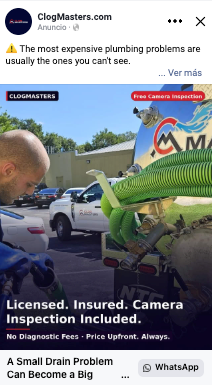
You boosted a few posts. You launched a campaign from Meta Ads Manager. You saw clicks, maybe some likes, maybe a message or two. But the phone didn’t ring enough, the lead quality was weak, and the sales never matched the spend.
That’s the pattern behind most failing facebook ads accounts in Miami. The platform looks simple because Meta wants more businesses spending faster. The problem is that easy setup doesn’t mean profitable execution. If your campaigns aren’t tied to tracking, targeting discipline, strong creative, and real conversion data, you’re not advertising. You’re donating budget to the auction.
If you’re already comparing agencies or looking for a serious partner, that’s the right move. The businesses that win with facebook ads don’t guess. They use structure, measurement, and aggressive optimization from day one.
Table of Contents
- Are Your Facebook Ads a Black Hole for Money
- The Common Mistakes That Burn Your Ad Budget
- The Anatomy of a Profitable Facebook Ads Campaign
- Precision Targeting for Miami Businesses
- What Our Facebook Ads Management Service Includes
- Answering Your Top Questions About Facebook Ads
- Real Facebook Ads Results for Local Businesses
- Your Next Step to Profitable Advertising
Are Your Facebook Ads a Black Hole for Money
Most business owners don’t realize how quickly facebook ads become wasteful. A campaign can look active while producing almost nothing that matters. Spend goes out daily. Leads stay flat. Sales teams blame marketing. Marketing blames the platform.
That isn’t bad luck. It’s what happens when you run ads in one of the most crowded advertising environments on the internet without a tight plan. Facebook reaches over two billion active users monthly and has more than 10 million active advertisers running campaigns, according to these Facebook advertising statistics. That scale creates opportunity, but it also means your budget disappears fast if you don’t control who sees the ad, why they click, and what happens after.
The interface is simple. The system isn’t.
Meta makes it easy to publish an ad. That’s not the same as building a revenue channel.
A real campaign has to answer questions most DIY setups ignore:
- Who is the buyer
- What message matches their current intent
- Which placement fits the offer
- What event defines success
- How will you measure lead quality after the click
If you can’t answer those clearly, the algorithm can’t help you. It will spend. It won’t think for you.
Practical rule: If you’re judging facebook ads by impressions, likes, or cheap clicks, you’re tracking platform activity, not business performance.
Why this matters for serious businesses
A local service company in Miami doesn’t need random traffic from outside its service area. A law firm doesn’t need low-intent leads who never answer the phone. A restaurant doesn’t need broad awareness if weeknight reservations are the primary problem.
Businesses close to buying agency help usually already know this. They’ve felt it in wasted spend, inconsistent lead flow, and a dashboard full of numbers that never translate into revenue.
If that’s where you are, the logical next step isn’t another boosted post. It’s a strategic review of the account structure, tracking, creative, and audience logic. If you want to see what professional management should look like, start with this overview of an agency for Facebook Ads.
The Common Mistakes That Burn Your Ad Budget
Most failing accounts don’t collapse because of one big error. They leak money through a series of small, avoidable mistakes.

Most DIY targeting is too broad or too random
One owner targets everyone in a city. Another piles on interests that don’t connect to purchase intent. Another copies a competitor’s audience logic without understanding why it might fail in a different market.
That’s how you end up paying for attention from people who will never buy.
Cold traffic on Facebook needs tighter control than most advertisers use. Device behavior matters. Placement behavior matters. Someone scrolling on mobile at night behaves differently than someone researching on desktop during business hours. If your message, landing page, and call to action don’t reflect that, you get clicks without momentum.
A few common examples:
- Local businesses miss geography. They advertise across entire counties when their actual service footprint is far smaller.
- Professional services miss intent. They chase broad demographic reach instead of building campaigns around actual motivations like urgency, trust, or convenience.
- Restaurants miss timing. They show generic brand content instead of pushing immediate actions tied to bookings, directions, or ordering.
Weak creative gets taxed by the platform
A lot of businesses think creative quality is subjective. It isn’t. On Facebook, poor creative execution has financial consequences.
Non-compliant creatives can face up to 30% higher CPMs and 20% lower delivery, according to this guide to Facebook ad specs. That means bad formatting, text-heavy assets, wrong dimensions, or low-quality media don’t just look amateur. They cost more and reach fewer people.
That’s before we even get into messaging.
The average DIY ad usually fails for one of four reasons:
| Problem | What happens |
|---|---|
| Generic headline | People scroll past because nothing feels relevant |
| Weak offer | The click has no urgency |
| Poor visual structure | The ad loses attention before the message lands |
| No clear CTA | Users don’t know what action to take next |
If you’re running campaigns without checking spec compliance, creative fatigue, and angle variation, you’re leaving performance to chance. A tighter creative process starts with standards. This Facebook advertising compliance guide shows why that matters before a campaign ever scales.
Bad creative doesn’t just lower response. It forces the account to pay more for worse traffic.
No funnel means no payoff
This is the biggest issue I see in small business accounts. The ad is treated like the whole strategy.
It isn’t.
An ad can only start the conversation. The sale depends on what happens after the click. If the landing page is slow, the form is too long, the message doesn’t match the ad, or the follow-up process is weak, the campaign stalls even when the ad itself is decent.
The best-performing accounts track micro-actions, not just final conversions. They watch who clicked, who stayed, who interacted with the form, and which ad angle brought in the better lead. Most DIY advertisers never build that layer. So they keep optimizing for shallow metrics and wondering why revenue stays flat.
The Anatomy of a Profitable Facebook Ads Campaign
Profitable facebook ads don’t start with the ad. They start with a business goal and a measurement plan.

A profitable campaign starts before the ad goes live
The first question isn’t “what should we post?” It’s “what action makes this campaign profitable?”
For one company, that’s a booked consultation. For another, it’s a qualified lead form. For a restaurant, it may be reservations, catering inquiries, or online orders. Every decision after that should support the primary action.
That means professional campaign planning usually includes:
Offer definition
The ad needs a reason to exist. “Learn more” is weak. A specific consultation, seasonal offer, event push, or service angle is stronger.Tracking architecture
Meta Pixel, event mapping, and clean analytics matter because they show which audiences and creatives drive real outcomes. If you want a useful reference on analytics setup, review this guide on how to set up Google Analytics 4.Landing page alignment
The page has to continue the promise of the ad. Same audience. Same pain point. Same offer. No message drift.Lead handling process
Fast response matters. Strong campaigns fail all the time because the sales process is sloppy after the form comes in.
The campaign has to match buyer intent
A profitable account usually separates traffic by awareness stage. Cold audiences need education or a clear entry-point offer. Warm audiences need stronger proof. Retargeting audiences need a reason to act now.
That structure is why professionally run Facebook lead generation campaigns average a 2.59% click-through rate and a 7.72% conversion rate, according to WordStream’s 2025 Facebook ads benchmarks. Those numbers don’t come from random boosted posts. They come from disciplined campaign design.
Here’s the standard I’d expect in a serious account:
- Awareness campaigns bring in qualified attention, not just reach.
- Consideration campaigns filter interest through stronger messaging, proof, and audience refinement.
- Conversion campaigns focus on the action that matters to the business.
- Retargeting campaigns recover people who engaged but didn’t convert.
What matters most: The objective in Ads Manager must match the action you want. If you want leads but optimize for traffic, don’t act surprised when you get clicks instead of prospects.
For businesses building a broader growth system, this is also where workflow matters. Teams that pair ad strategy with CRM, reporting, and process improvement often make better decisions faster. That’s why resources on intelligent automation consulting services are useful. They help connect ad data to sales operations instead of treating marketing as an isolated task.
Optimization is a system, not a mood
Most DIY advertisers make reactive changes. They panic after a few days, swap creatives too fast, broaden audiences when performance dips, or kill campaigns before enough signal develops.
Professionals work differently. They review ad angles, placements, devices, landing page behavior, and lead quality together. They don’t just ask which ad got the click. They ask which angle attracted the right user and what that user did next.
A profitable account keeps improving because the team is tracking behavior with intent. That’s the difference between “running ads” and managing a performance channel.
If you’re evaluating agencies, this is the bar. You don’t want someone who knows how to launch. You want someone who knows how to diagnose, refine, and scale.
Precision Targeting for Miami Businesses
Miami is not one market. It’s a cluster of different buying behaviors packed into a dense, expensive, fast-moving region.

Local targeting should match how people actually buy in Miami
If you run facebook ads for a local business here, broad targeting is lazy. A company serving Brickell, Wynwood, Aventura, Coral Gables, or Miami Beach isn’t selling to “all of Miami” in the same way.
Geo-targeting lets advertisers restrict delivery to precise radii, such as 3 to 7 miles, and that can lower customer acquisition costs by 20% to 50% in dense urban markets like Miami, according to this geo-targeting example for local businesses. That matters because wasted impressions outside a realistic service area don’t just hurt efficiency. They contaminate the account with weak signals.
A strong Miami campaign often uses a smaller geographic zone first, then expands only after performance proves out.
Here’s where most businesses get it wrong:
- They target too wide
- They ignore travel friction
- They forget neighborhood behavior changes by category
- They don’t exclude non-serviceable areas cleanly
For businesses also running search campaigns, location logic should stay consistent across channels. This breakdown of Google Ads location targeting is useful because the same geographic discipline applies on Meta.
Different Miami businesses need different audience logic
A restaurant in South Beach shouldn’t use the same campaign structure as an estate planning attorney in Coral Gables. A med spa in Midtown shouldn’t advertise like a home service company covering North Miami and nearby zones.
The audience logic should reflect how buyers behave in each category.
Restaurants and hospitality
These campaigns usually work best when the ad is tied to immediate action. The message needs to answer a practical question fast. Why this place, why now, and how close is it?
Strong targeting often combines:
- Tight radius control
- Mobile-first placements
- Visual creative built around atmosphere or menu appeal
- Fast-action CTAs such as reservations, directions, or ordering
Professional services
Law firms, consultants, and education providers usually need more trust before the conversion. The audience can still be local, but the ad angle must do more than attract curiosity.
Useful campaign ingredients include:
- Service-area filtering
- Message variation by need state
- Landing pages matched to one core service
- Retargeting based on engagement depth
Miami buyers are quick to ignore irrelevant ads. Relevance is not a branding detail here. It’s the cost-control mechanism.
Local service companies
Home services, automotive, repair, and similar businesses need campaigns built around urgency and geography. Device segmentation is especially valuable here. Mobile users often want immediate action. Desktop users may want more detail before submitting a form.
That’s why local expertise matters. Good targeting isn’t just selecting a city in Ads Manager. It’s translating real-world business boundaries into campaign logic that produces qualified leads instead of noisy traffic.
What Our Facebook Ads Management Service Includes
Most agency offers sound similar until you ask one basic question. What do I get?
A serious facebook ads management service should be operational, not vague. It should show how strategy turns into execution, and how execution turns into measurable improvement.
Strategy and setup
At the start, the work should include foundational decisions that prevent waste later.
Business and offer review
We identify what the campaign is supposed to generate. Calls, form leads, bookings, purchases, or another defined action.Audience research
This covers local targeting logic, customer intent, device behavior, and angle development. Broad assumptions aren’t enough.Account and campaign architecture
Campaigns need clean naming, logical segmentation, and objectives tied to outcomes that matter.Pixel and event configuration
Tracking has to be installed and checked before scale. Without that, optimization is guesswork.
Creative and testing
Most underperforming campaigns don’t test enough variation. They rely on one message, one image, and one audience. That’s not strategy. That’s hope.
A proper service should include:
Ad copy development
Different hooks for different motivations. Price is one angle. Speed is another. Trust is another.Creative direction
Static images, carousel concepts, video variations, and offer framing based on the business type.A/B testing structure
Not random experiments. Controlled testing of messaging, audiences, placements, and calls to action.
The right agency doesn’t just ask which ad won. It asks why it won, what kind of user it attracted, and whether that user turned into revenue.
Optimization and reporting
Most value is found in active management. Setup matters, but it's what separates average accounts from profitable ones.
A quality management service should include:
Daily or frequent monitoring
Spend pacing, delivery issues, creative fatigue, and quality signals need active oversight.Budget optimization
Money should move toward proven combinations, not stay locked in weak segments.Landing page feedback
If traffic quality is decent but conversion quality is weak, the page or follow-up process may be the problem.Performance reporting
Clear reporting should show what happened, what changed, what was learned, and what happens next.Communication standards
Clients should know who to contact, how often they’ll hear from the team, and how strategic decisions are communicated.
If an agency can’t explain its process in concrete terms, don’t hire it. You’re not buying access to Ads Manager. You’re buying judgment, tracking discipline, creative testing, and accountability.
Answering Your Top Questions About Facebook Ads
Most prospects don’t need more information. They need clean answers to the right questions.
Is it worth the investment
Yes, if the account is managed like a performance system and not a hobby.
The average ROI for Facebook Ads is around 4x ad spend, and over 70% of advertisers achieve a positive ROI within the first three months of professionally managed campaigns, according to the earlier-cited Facebook advertising data. That doesn’t guarantee your outcome. It does show why businesses keep investing when the work is done correctly.
The key phrase is professionally managed.
A bad campaign can absolutely waste money. A disciplined campaign can become one of the most efficient lead channels in your mix, especially when paired with strong landing pages, fast follow-up, and clean retargeting.
Can’t I just do it myself
You can. Most businesses do at first.
The primary question is whether you should keep doing it yourself after the account starts costing you missed leads, low-quality inquiries, and time you should be spending on operations or sales.
DIY breaks down for three reasons:
You don’t see the hidden leaks
Targeting waste, creative mismatch, tracking errors, and weak follow-up usually go unnoticed.You optimize for the wrong metrics
Clicks feel productive. Revenue is what matters.You move too slowly
Good account management requires regular analysis, testing, and decision-making. Most owners can’t give it that level of attention.
If your time is worth anything, amateur ad management is rarely cheap.
How long does it take to see results
That depends on the offer, market, landing page, and account condition. But the right expectation is simple. Early days are for signal collection. Stronger results come from structured optimization, not instant magic.
Some campaigns show promising traction quickly. Others need refinement before they become reliable. The mistake is expecting immediate scale from an untested setup or making constant changes before meaningful patterns appear.
A better way to judge progress is to look at the sequence:
| Phase | What should happen |
|---|---|
| Launch | Tracking, delivery, and audience response are validated |
| Learning | Early winners and weak points start to emerge |
| Refinement | Budgets, creatives, and targeting improve based on real behavior |
| Scaling | Spend increases only after profitable patterns are clear |
If an agency promises instant dominance, ignore them. Serious operators know that profitable growth comes from disciplined iteration.
Real Facebook Ads Results for Local Businesses
Results become believable when you see how strategy fits the business model.

Restaurant
A local restaurant had the usual issue. Good atmosphere, good menu, weak consistency on slower nights. Their ads were broad, their targeting was loose, and their creative looked more like generic social content than paid media built to drive action.
The fix was strategic, not flashy. Radius targeting tightened around realistic customer zones. Mobile-focused creative highlighted immediate reasons to visit. The landing path reduced friction and pushed users toward booking or directions instead of passive browsing.
The result wasn’t “more awareness.” It was a better flow of local intent.
Professional services firm
A professional services company came in with traffic but poor lead quality. Plenty of clicks. Not enough serious prospects. Their account was optimized for surface activity, and the landing page did little to qualify the visitor.
The campaign improved after three decisions:
- Sharper audience segmentation
- Different ad angles tied to specific buyer motivations
- Tracking micro-actions so the team could see which message produced qualified behavior
That last point matters. If one ad gets more clicks but another produces more engaged prospects, the second ad is the better business asset even if the platform dashboard looks less exciting at first.
A good example of category-specific strategy can be seen in campaigns like Facebook ads for aesthetic clinics, where trust, qualification, and local buyer intent matter more than vanity engagement.
Here’s a practical look at how local businesses approach Meta campaigns:
Aesthetic clinic
Aesthetic and wellness brands often attract a lot of curiosity traffic. That’s the problem. Interest is easy. Qualified action is harder.
The accounts that perform best usually do three things well:
- Match the creative to the buyer’s level of trust
- Use retargeting to bring back visitors who engaged but didn’t book
- Build landing pages that reduce hesitation instead of adding it
The strongest campaigns don’t chase the biggest audience. They filter for the right one.
That’s the core lesson across local business categories. Whether you run a restaurant, law firm, med spa, or service business, profitable facebook ads come from tighter inputs, better measurement, and deliberate optimization.
Your Next Step to Profitable Advertising
If your current facebook ads are inconsistent, the cost isn’t limited to ad spend. You’re also losing calls, leads, and customers to competitors running tighter systems.
That’s the part most businesses ignore. Inaction has a price. Every month you leave a weak account untouched, Meta keeps collecting data from the wrong users, your creatives keep aging, and your market keeps moving.
The logical next step is not another round of guessing.
It’s a strategy review built around the questions that matter:
- What’s broken in the current account
- Where the wasted spend is happening
- What should be tracked
- Which audience and offer structure makes sense for your business
- How to turn facebook ads into a dependable acquisition channel
If you’re near a decision, make it a useful one. Get clarity on what’s working, what isn’t, and what a profitable structure should look like before you spend another dollar.
If you’re ready to stop guessing and start running facebook ads with a real ROI framework, book a strategy session with VIP TECH CONSULTING. You’ll get a direct review of your current setup, clear insight into where your budget is leaking, and a practical path to stronger lead generation in Miami and beyond.